4-bin system in Hamburg: Learn how organic, paper, recycling and residual waste bins improve waste separation, increase recycling rates and actively protect the environment.
4-bin system in Hamburg: Why it matters for the city and the environment
The 4-bin system in Hamburg is a core element of the city’s sustainable waste management and climate strategy. Introduced by Stadtreinigung Hamburg, the public waste management service, this system aims to improve waste separation, increase recycling rates and significantly reduce residual waste. Today, almost all eligible households in Hamburg are equipped with the four bins – organic, paper, recycling and residual waste – with only a few exceptions where people compost themselves or simply lack the space.
Since the introduction of the 4-bin system in Hamburg, the city has seen measurable progress in waste collection and recycling. In 2020 alone, Hamburg households collected around 617,700 tonnes of waste and recyclables, an increase of 3.5% compared to the previous year – clear evidence of growing awareness and participation. At the same time, Stadtreinigung Hamburg is pursuing the ambitious goal of becoming climate-neutral by 2035, relying more and more on recycling, CO₂ reduction and renewable energy.
4-bin system in Hamburg: The four bins at a glance
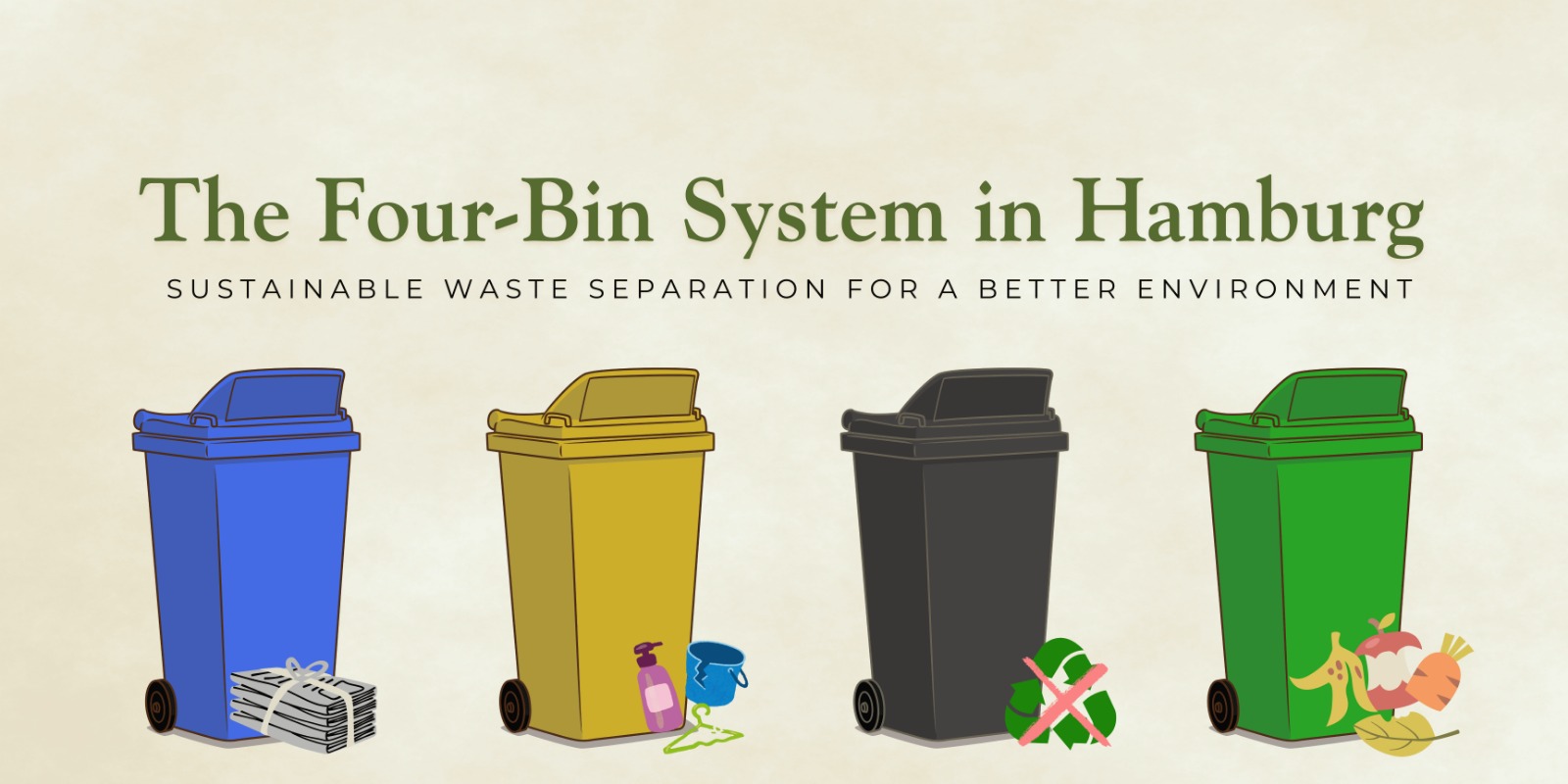
The 4-bin system in Hamburg is built around four clearly defined waste categories. Each bin has a specific purpose, making it easier to recover valuable materials and keep residual waste as low as possible.
The four bins are:
- Green organic bin (biowaste / organic waste).
- Blue paper bin (paper, cardboard, cartons).
- Yellow recycling bin (recyclable packaging and materials).
- Black residual waste bin (non-recyclable waste).
Thanks to the 4-bin system in Hamburg, households, restaurants and businesses have a simple, uniform structure for everyday waste separation. When everyone knows which waste goes into which bin, protecting the environment becomes part of the daily routine.
4-bin system in Hamburg: Green organic bin and blue paper bin
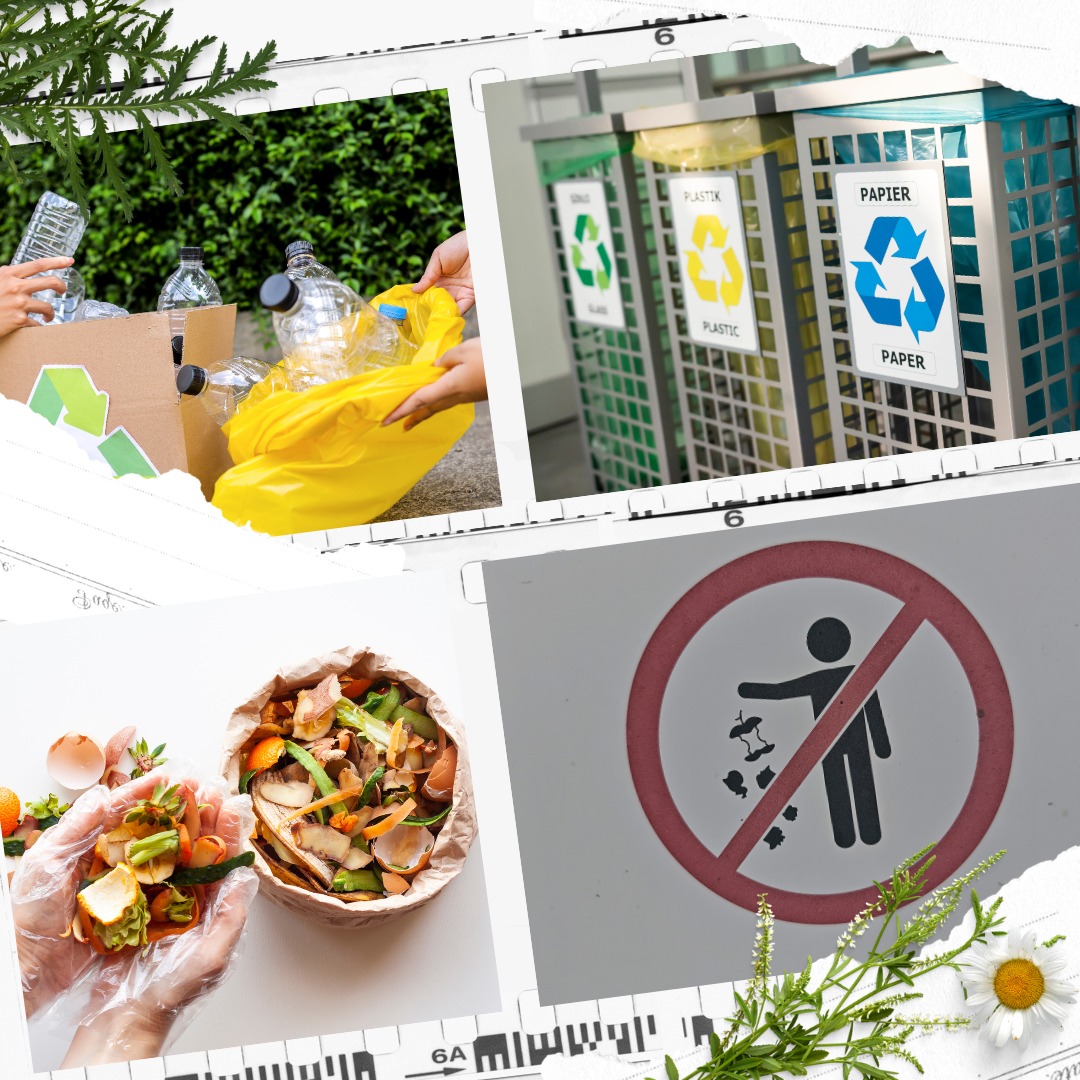
A key pillar of the 4-bin system in Hamburg is the green organic bin. It is used for all compostable organic waste such as fruit and vegetable peelings, coffee grounds, tea bags without plastic, eggshells, as well as garden waste like leaves, grass cuttings and small branches. Cooked vegetables or bread leftovers can also be disposed of here in small quantities. Meat and fish scraps or very fatty food, however, should not go into the organic bin because they cause odours and attract pests; they belong in the residual waste.
The 4-bin system in Hamburg also includes the blue paper bin for paper, cardboard and cartons. Newspapers, magazines, brochures, office paper, envelopes and cardboard packaging all belong here. Contaminated or heavily soiled paper (for example greasy pizza boxes), wallpaper or coated speciality paper do not, and must be placed in residual waste or, depending on the case, in the recycling bin. Correct use of these two bins ensures that valuable paper fibres can be reused several times, conserving natural resources.
 4-bin system in Hamburg: Yellow recycling bin and black residual waste bin
Within the 4-bin system in Hamburg, the yellow recycling bin plays a central role in collecting recyclable packaging. It is used for plastics, metals and composite packaging such as PET bottles, plastic films, yoghurt pots, cans, aluminium foils and beverage cartons. Packaging should be emptied but not thoroughly washed, so that sorting processes remain efficient and resource-friendly.
The black residual waste bin in the 4-bin system in Hamburg is reserved for all items that cannot be recycled or do not fit into any of the other categories. Typical examples include heavily soiled packaging, hygiene products such as tissues and nappies, ceramics, porcelain, broken lightbulbs and small mixed waste items that have no recycling route. One of the main goals of the 4-bin system in Hamburg is to keep this fraction as small as possible, because residual waste is usually incinerated and produces more CO₂ emissions.
Advantages of the 4-bin system in Hamburg for recycling and climate protection
The 4-bin system in Hamburg offers clear benefits for the environment, the city and its residents. By collecting organic waste, paper, packaging and residual waste separately, the recycling rate can be significantly improved. Organic waste can be turned into compost or biogas, paper fibres into new paper products, and metals and plastics are returned to the raw materials cycle.
Another major advantage of the 4-bin system in Hamburg is the reduction of residual waste volumes. When waste is sorted correctly, far fewer materials end up in incineration plants – which means less air pollution and lower CO₂ emissions. At the same time, the system is easy to use because the separation rules are clear and practical for everyday life, both in private households and in gastronomy or events.
4-bin system in Hamburg in everyday life: How to separate correctly
For the 4-bin system in Hamburg to fully deliver its potential, consistent separation in everyday life is crucial. Small, simple habits can make a big difference: keeping a separate container for bio waste in the kitchen, removing food leftovers from paper and packaging, collecting recyclables separately and only throwing truly non-recyclable items into the residual waste bin.
By using the 4-bin system in Hamburg correctly, private households, cafés, restaurants and event organisers can actively contribute to resource conservation. The better the system is used, the more materials stay in the recycling loop instead of being burned. This saves raw materials, energy and emissions – and helps make Hamburg step by step a more climate-friendly city.
Jetzt auf Naturstrohhalme umsteigen und den eigenen CO₂-Fußabdruck beim Trinken aktiv senken!
Jetzt bestellenKontakt:
📞 +49 40 8707 6348
📧 info@natur-strohhalme.com
🌐 www.natur-strohhalme.com
Vegetable Drinking Straws at Intergastra 2026: A Review of Innovation
Discover how our vegetable drinking straws took center stage at Intergastra 2026 in Stuttgart. An...
Read morehidden danger of glass straws: hidden danger of glass straws – what you need to know
hidden danger of glass straws: Viral TikTok video warns of splinters, injuries and hygiene risks....
Read morehome compostable versus industrial compostable: What really is compostable and how to dispose of it correctly
home compostable versus industrial compostable: Learn the real difference, which materials belong where, and why...
Read more4-bin system in Hamburg: 4-bin system in Hamburg for better waste separation and recycling
4-bin system in Hamburg: Learn how organic, paper, recycling and residual waste bins improve waste...
Read moreINTERGASTRA 2026: INTERGASTRA 2026 in Stuttgart – Natur-Strohhalme presents sustainable vegetable straws for gastronomy
INTERGASTRA 2026 in Stuttgart: Discover Natur-Strohhalme with sustainable vegetable drinking straws for gastronomy, hospitality and...
Read moreGreen Skills: How Green Skills Are Shaping the Sustainable Future of Work
Entdecken Sie, warum green skills wichtig für die Zukunft der Arbeit sind. Erfahren Sie, was...
Read moreWinter Skincare in Harmony with Nature: Tips for Healthy and Sustainable Skin
Discover how Winter Skincare in Harmony with Nature protects your skin from cold, dryness, and irritation. Learn...
Read moreClimate Change and Food Security: Protecting Our Nutrition for the Future
Endangered Foods – Learn How Wheat, Coffee, Peanuts and Grapes Are Threatened by Climate Change...
Read more