
962 Tons of Waste – How Oktoberfest Produces Massive Amounts of Trash Every Year, What Lies Behind These Numbers, and How Visitors, Organizers and the City Can Work Together to Avoid Waste, Separate It Properly and Celebrate Sustainably.
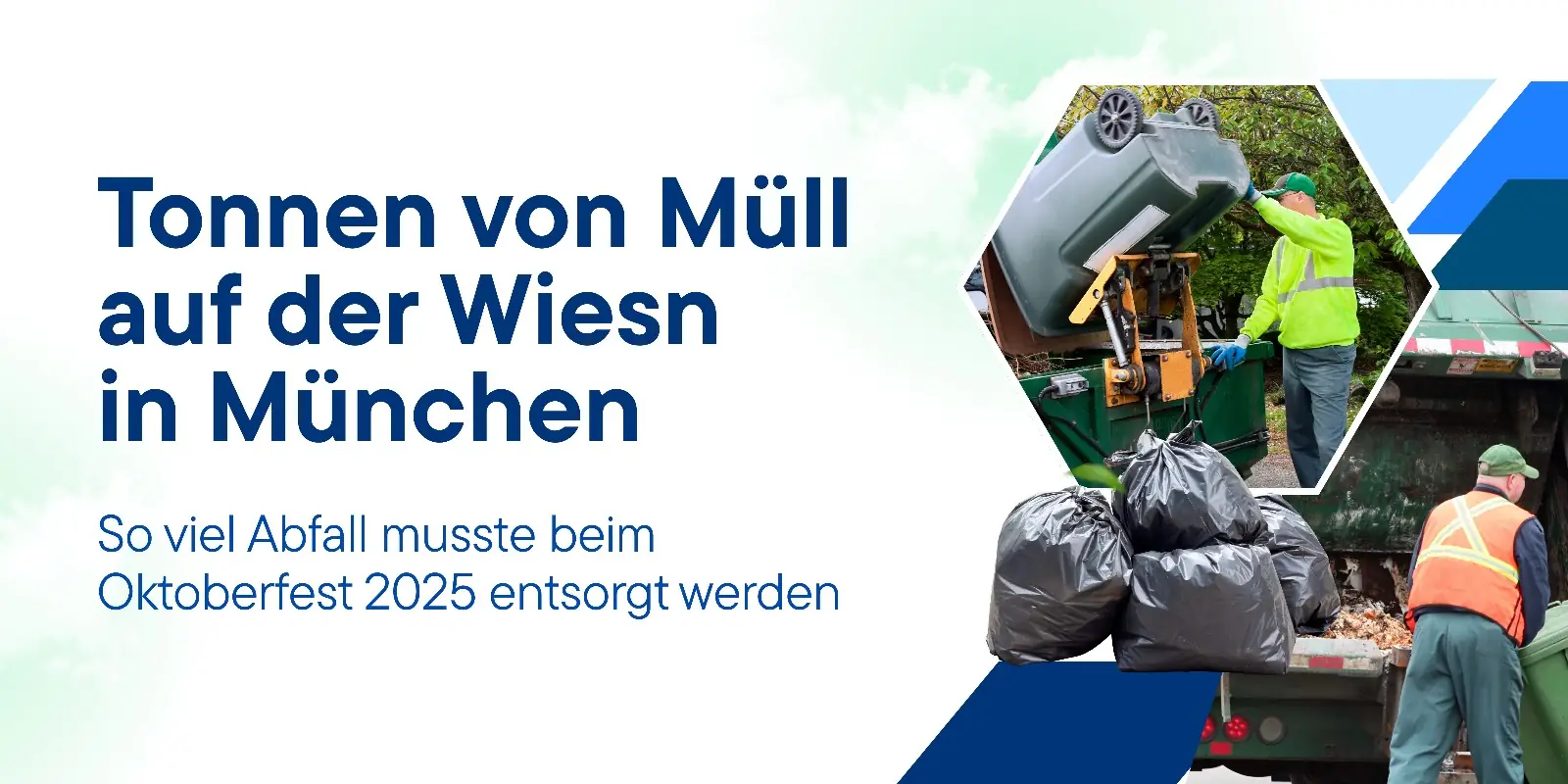
962 Tons of Waste: How Major Events Like Oktoberfest Can Become More Sustainable
962 tons of waste – this impressive figure represents the massive amounts of trash generated at Oktoberfest 2025 on Munich’s Theresienwiese. With around 6.5 million visitors in just 16 days, the challenge of waste management at large-scale events becomes clear. Yet 962 tons of waste are not only a problem – they are also a call to find more sustainable solutions and take responsibility for the environment and the city.
962 Tons of Waste – Where Does All the Trash Come From?
The 962 tons of waste are no coincidence: the huge crowds at Oktoberfest, every beer, every meal, every souvenir bring large amounts of disposable packaging, paper plates, straws, napkins, and plastic cutlery. According to AWM Munich, Oktoberfest 2025 alone produced 770 tons of residual waste, 76 tons of paper, and 116 tons of mixed glass. Even though reusable options are present, the lack of proper waste separation, overflowing bins, and single-use products keep the waste balance high.
962 Tons of Waste – A Sobering Record
Every day, a dedicated team of around 30 employees from Munich’s city cleaning service works until late at night to clear the festival grounds and empty the containers. Nevertheless, year after year, an alarming amount of waste remains – 962 tons of waste still mark a record, even though Oktoberfest.de reported a slight reduction compared to the previous year in 2025.
Causes: Why Do 962 Tons of Waste Accumulate?
- High visitor numbers, dense crowds, and mass consumption lead to enormous amounts of packaging waste.
- Single-use products such as plastic cutlery, paper plates, disposable straws, and packaging dominate the offerings.
- Insufficient or poorly used waste separation means paper, glass, and recyclables end up in residual waste.
- Even the use of reusable beer mugs is no cure-all – it only addresses part of the problem, not the overall volume.
962 Tons of Waste: What Can Each Visitor Contribute?
- Choose reusable instead of disposable: bring your own cutlery, cups, or reusable bags.
- Order drinks without straws or bring a reusable one (e.g., glass, stainless steel, or plant-based).
- Don’t leave trash lying around: keep packaging and dispose of it in the right bins.
- Prefer sustainable souvenirs without packaging.
- Show respect for cleaning staff by managing your own waste responsibly.
Sustainable Solutions for Operators – 962 Tons of Waste Are Not a Long-Term Option
- Introduce deposit-based reusable systems across the board: glasses, cups, plates, and cutlery with a deposit.
- Prefer eco-friendly packaging and biodegradable materials.
- Facilitate waste separation: clearly labeled containers for paper, glass, and residual waste at every stand.
- Communicate with guests: clear messages about waste separation and sustainable offers help influence behavior positively.
Natural Straws: Small Measure, Big Impact Against 962 Tons of Waste
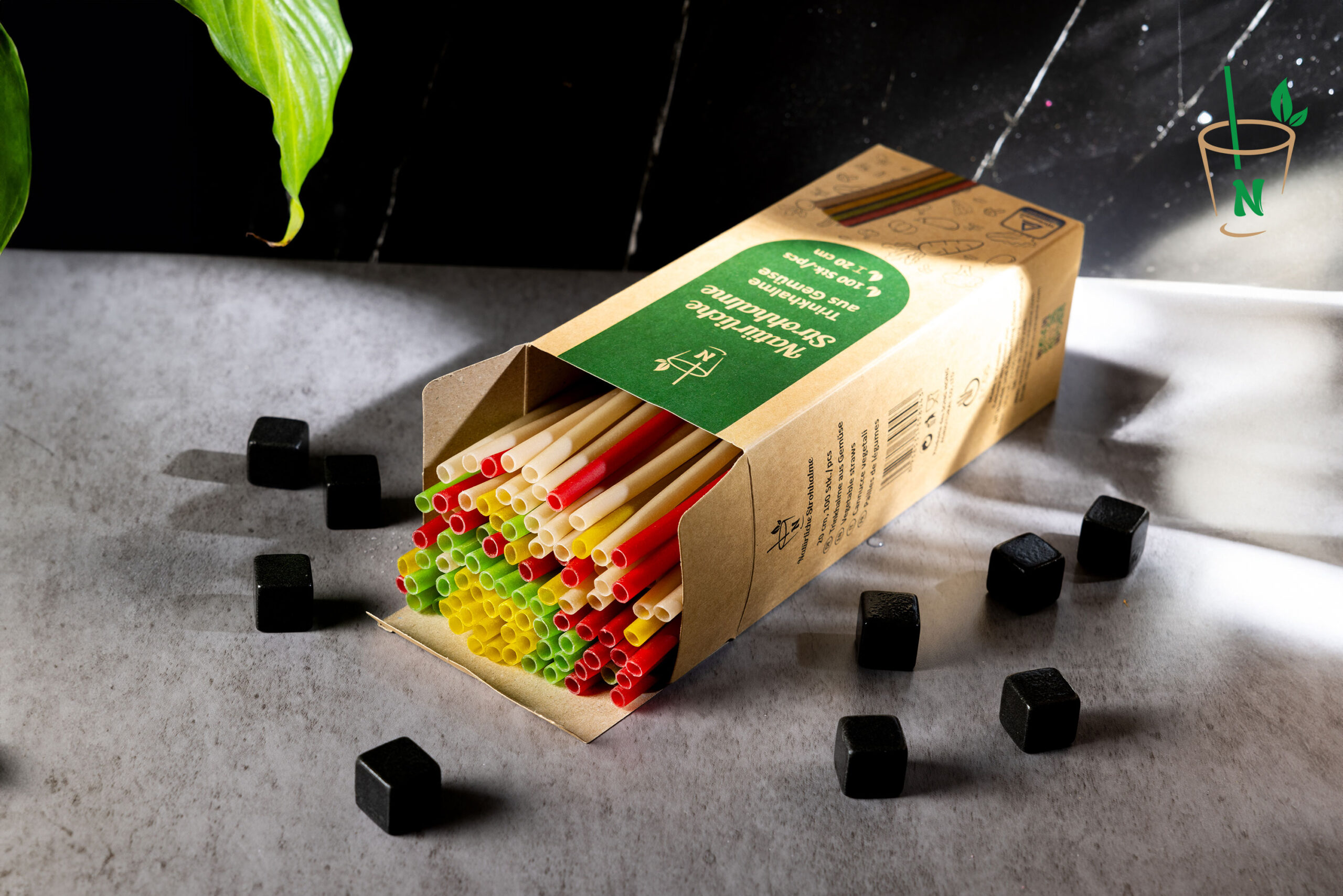
Switching to plastic-free, compostable drinking straws – so-called natural straws – shows how small innovations can make a difference:
- Environmentally friendly and compostable after use.
- More stable and neutral in taste than paper straws.
- Visually fitting for the Bavarian festival atmosphere and appreciated by eco-conscious guests.
These measures can be easily introduced at many stands and help significantly reduce the 962 tons of waste.
Recommendations: How Can 962 Tons of Waste Be Reduced?
- Promote more reusable options: rewards and discounts for guests who bring their own containers or bags.
- Expand waste separation: more and better-marked collection points for paper, glass, and residual waste directly at the stands.
- Raise public awareness: info boards, flyers, QR codes explaining proper waste separation and sustainable celebrations.
- Adjust supply chains: stands can demand low-waste, compostable packaging already at delivery.
- Education and awareness: visitors must understand why their contribution to reducing 962 tons of waste is so important.
Success Story: Oktoberfest as a Role Model for Other Major Events
The reduction of waste by 12.4% in 2025 already shows what is possible through joint action. 962 tons of waste are still a lot – but an initial improvement is visible! The experiences and solutions of Oktoberfest serve as best practice for other major events in Germany:
- Large-scale introduction of reusable and deposit systems.
- Visible presence of waste separation bins across the entire site.
- Controlled entry points for food and drink to reduce packaging waste.
Conclusion: 962 Tons of Waste Are Both a Challenge and an Opportunity
962 tons of waste highlight how consumption and sustainability intersect at major events. Yet this figure is also an incentive for more environmental protection, conscious behavior, and innovative solutions for a cleaner city and responsible celebrations. When visitors and operators work together, Oktoberfest can become a role model for sustainable festival culture – where great joy and great responsibility go hand in hand.
hidden danger of glass straws: hidden danger of glass straws – what you need to know
hidden danger of glass straws: Viral TikTok video warns of splinters, injuries and hygiene risks....
Read morehome compostable versus industrial compostable: What really is compostable and how to dispose of it correctly
home compostable versus industrial compostable: Learn the real difference, which materials belong where, and why...
Read more4-bin system in Hamburg: 4-bin system in Hamburg for better waste separation and recycling
4-bin system in Hamburg: Learn how organic, paper, recycling and residual waste bins improve waste...
Read moreINTERGASTRA 2026: INTERGASTRA 2026 in Stuttgart – Natur-Strohhalme presents sustainable vegetable straws for gastronomy
INTERGASTRA 2026 in Stuttgart: Discover Natur-Strohhalme with sustainable vegetable drinking straws for gastronomy, hospitality and...
Read moreGreen Skills: How Green Skills Are Shaping the Sustainable Future of Work
Entdecken Sie, warum green skills wichtig für die Zukunft der Arbeit sind. Erfahren Sie, was...
Read moreWinter Skincare in Harmony with Nature: Tips for Healthy and Sustainable Skin
Discover how Winter Skincare in Harmony with Nature protects your skin from cold, dryness, and irritation. Learn...
Read moreClimate Change and Food Security: Protecting Our Nutrition for the Future
Endangered Foods – Learn How Wheat, Coffee, Peanuts and Grapes Are Threatened by Climate Change...
Read more962 Tons of Waste: Sustainable Solutions for Oktoberfest and Major Events
962 Tons of Waste – How Oktoberfest Produces Massive Amounts of Trash Every Year, What...
Read more