Our vegetable straws are manufactured in Vietnam, where we not only create valuable jobs but also contribute to environmental awareness and responsible resource management through educational efforts.
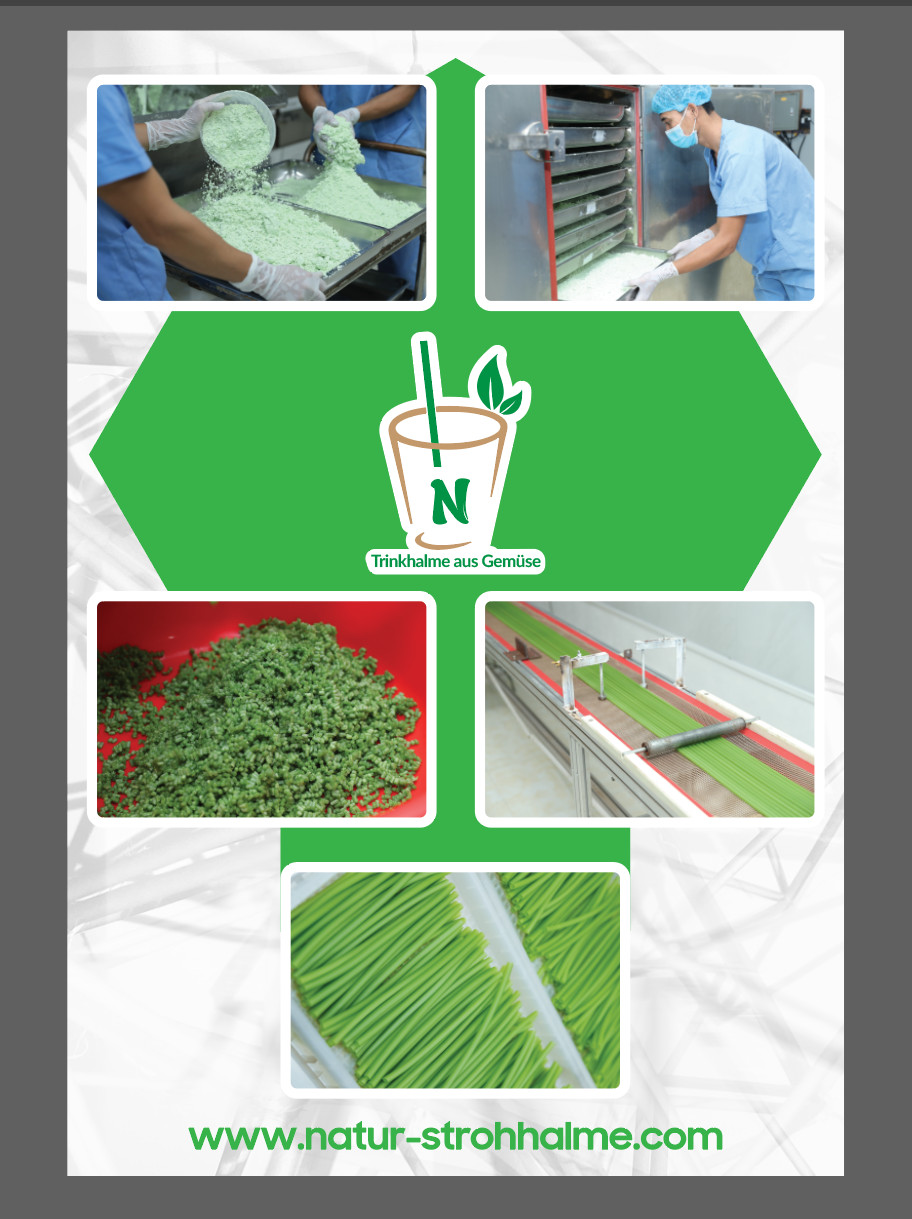
- Mixing the Dough: The harvested vegetables are cleaned, dried, and ground into powder. The powder is then put into a mixing machine to create a moist dough mixture.
- Steaming the Dough: The dough mixture is placed in a steamer to improve adhesion and kill germs.
- Crushing the Dough: After steaming, the powder undergoes a process to be formed into small pellets. This step also helps to create the color of the straws.
- Shaping the Straws: The pellets are put into an extrusion machine to form the straws. The size of the straws can be flexibly adjusted in this process.
- Drying the Straws: After the straws are cut to the required sizes, they need to undergo a drying process to ensure their strength and structure.
- Sorting and Packaging: The final products are packaged in boxes of 100 straws per pack, each in various colors and sizes (20 cm and 15 cm).
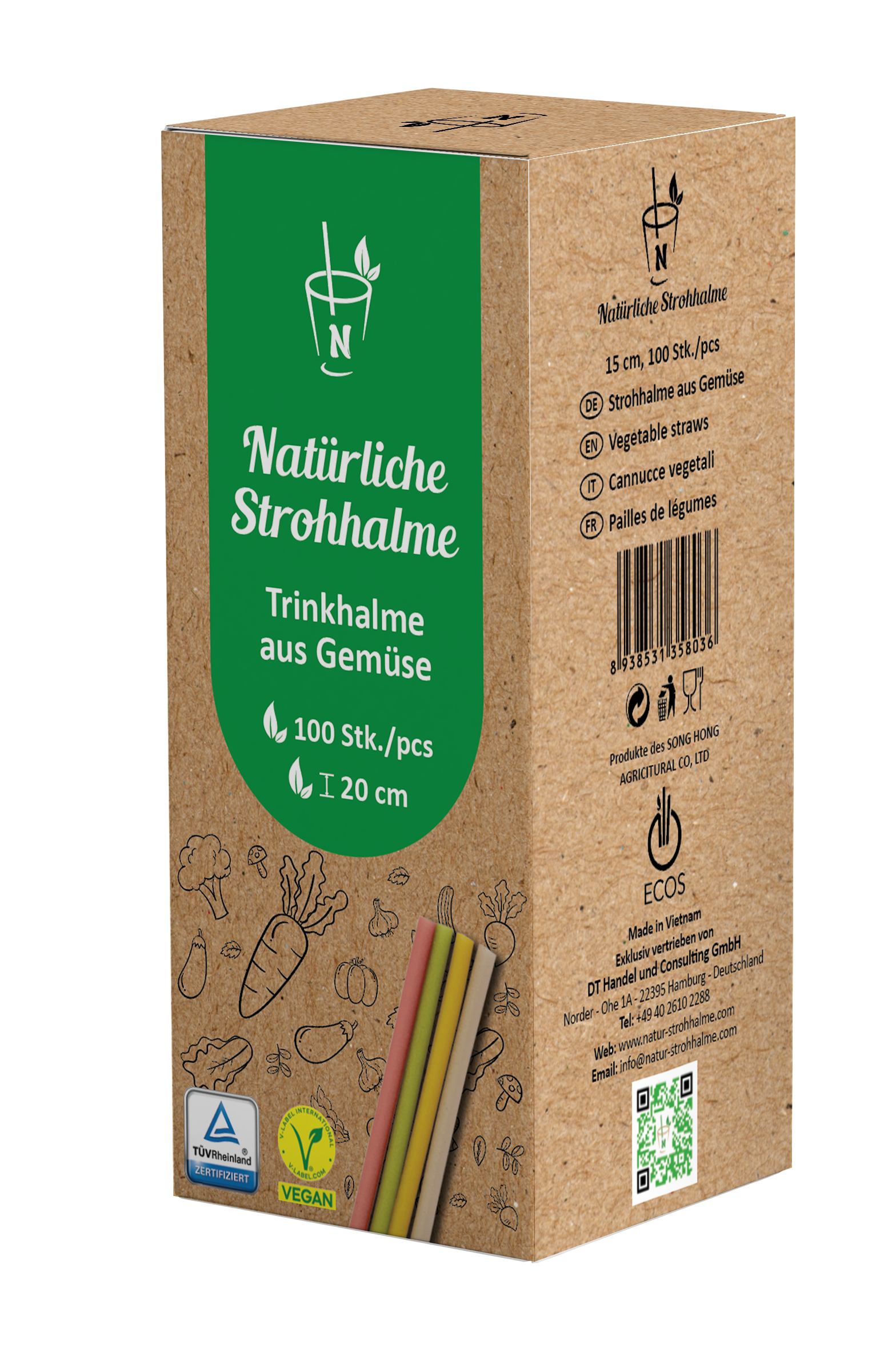
Costs of Natural Straws:
- Length: 20 cm – 100 pcs
- Net: 8 €
- Color: White, Yellow, Green, Red, or a mix of 4 colors
- Length: 15 cm – 100 pcs
- Net: 7.50 €
- Color: White, Yellow, Green, Red, or a mix of 4 colors
Order: www.natur-strohhalme.com
The straws are made from 100% organic materials, including starch and vegetables.
They dissolve only after more than a day of continuous water contact.
Each straw is designed for single use and is easily biodegradable, making them environmentally friendly.
The shelf life is up to 18 months.
Our production takes place entirely in Vietnam, on standardized production lines to ensure high quality.
The product is certified with internationally recognized certifications such as Vegan, TÜV, and ISO 22000:2018.
hidden danger of glass straws: hidden danger of glass straws – what you need to know
hidden danger of glass straws: Viral TikTok video warns of splinters, injuries and hygiene risks....
Read morehome compostable versus industrial compostable: What really is compostable and how to dispose of it correctly
home compostable versus industrial compostable: Learn the real difference, which materials belong where, and why...
Read more4-bin system in Hamburg: 4-bin system in Hamburg for better waste separation and recycling
4-bin system in Hamburg: Learn how organic, paper, recycling and residual waste bins improve waste...
Read moreINTERGASTRA 2026: INTERGASTRA 2026 in Stuttgart – Natur-Strohhalme presents sustainable vegetable straws for gastronomy
INTERGASTRA 2026 in Stuttgart: Discover Natur-Strohhalme with sustainable vegetable drinking straws for gastronomy, hospitality and...
Read moreGreen Skills: How Green Skills Are Shaping the Sustainable Future of Work
Entdecken Sie, warum green skills wichtig für die Zukunft der Arbeit sind. Erfahren Sie, was...
Read moreWinter Skincare in Harmony with Nature: Tips for Healthy and Sustainable Skin
Discover how Winter Skincare in Harmony with Nature protects your skin from cold, dryness, and irritation. Learn...
Read moreClimate Change and Food Security: Protecting Our Nutrition for the Future
Endangered Foods – Learn How Wheat, Coffee, Peanuts and Grapes Are Threatened by Climate Change...
Read more962 Tons of Waste: Sustainable Solutions for Oktoberfest and Major Events
962 Tons of Waste – How Oktoberfest Produces Massive Amounts of Trash Every Year, What...
Read more