
The municipal packaging tax is spreading in Germany. Learn how natural straws help businesses avoid extra fees while promoting high-level sustainability.
Municipal Packaging Tax: Avoid the Cost Trap with Natural Straws
Natural straws are becoming more than just an eco-friendly accessory in the era of expanding municipal packaging taxes—they are a strategic decision for gastronomy businesses. As more German cities follow the example of Tübingen by levying taxes on single-use items, business owners are facing a critical question: How can I reduce waste without compromising my margins through new taxes?. This article explores the development of the packaging tax and explains the unique role natural straws play in protecting your business from additional levies.
Single-Use Packaging: A Systemic Problem
The daily consumption of to-go products has left a massive mark on the environment in Germany. Every hour, approximately 320,000 disposable cups are used, totaling over 2.8 billion cups per year. This is supplemented by a vast amount of disposable cutlery and drinking straws that are often used for only a few minutes.
This development has reached structural proportions:
- In Germany alone, over 346,000 tons of waste were generated annually from disposable tableware.
- The costs for cleaning littered parks and public squares burden municipalities with millions of euros.
- Voluntary measures by businesses often failed to achieve the necessary widespread impact.
 The Tübingen Model: Tax as a Management Tool
To relieve city cleaning services and force a real change, Tübingen introduced a municipal packaging tax in 2022 as a nationwide pioneer. The goal is clear: make single-use more expensive so that multi-use becomes more attractive.
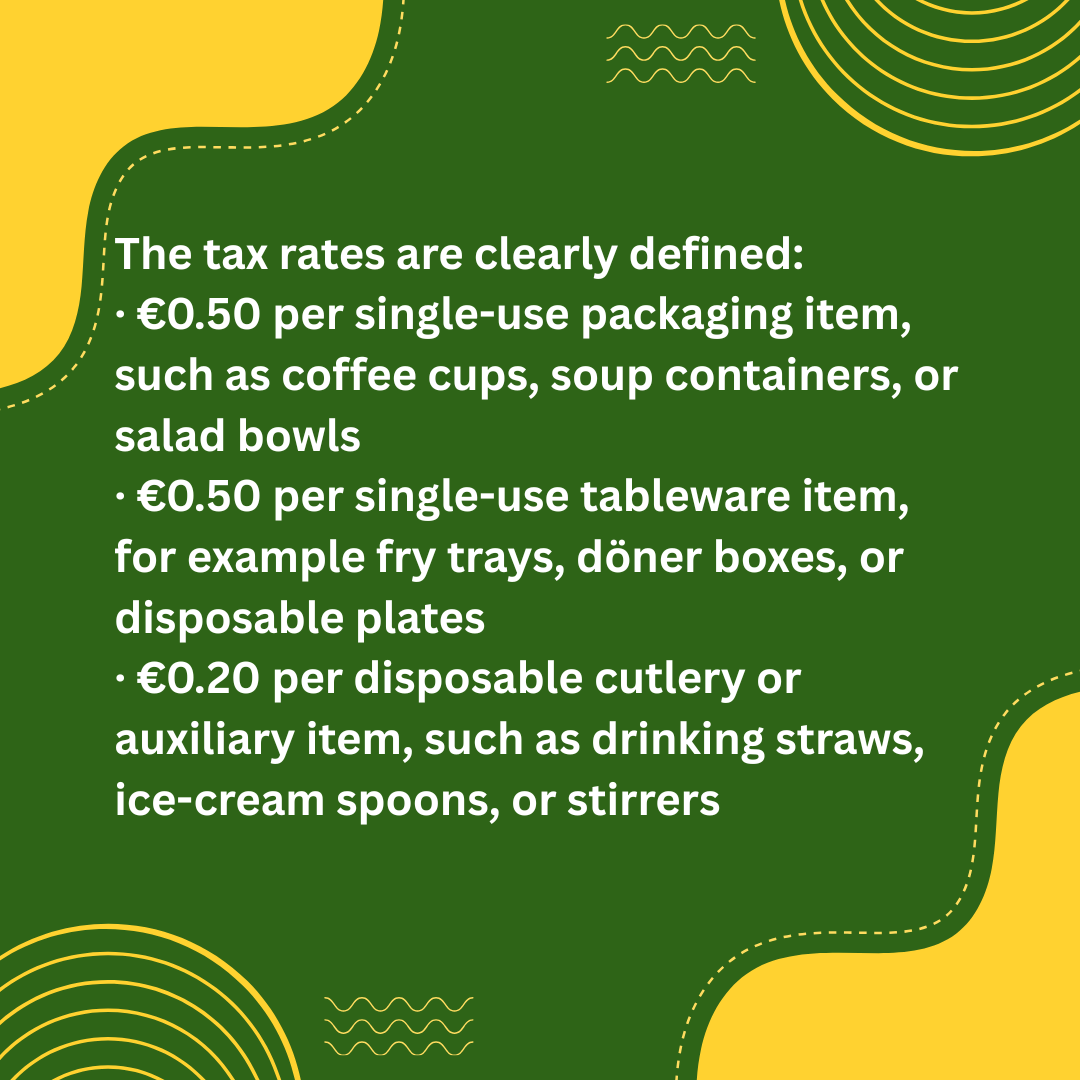
The tax rates are significant:
0.50 Euro per single-use container (e.g., bowls or cups).
0.20 Euro per single-use cutlery item or aid, such as drinking straws.
Importantly, the material of the disposable item does not matter—paper, cardboard, or “bio-plastics” are all taxed equally if they are disposed of after a single use. High courts have already confirmed the legality of this tax, leading more cities like Heidelberg, Freiburg, and Konstanz to follow suit.
Why Natural Straws Occupy a Unique Position
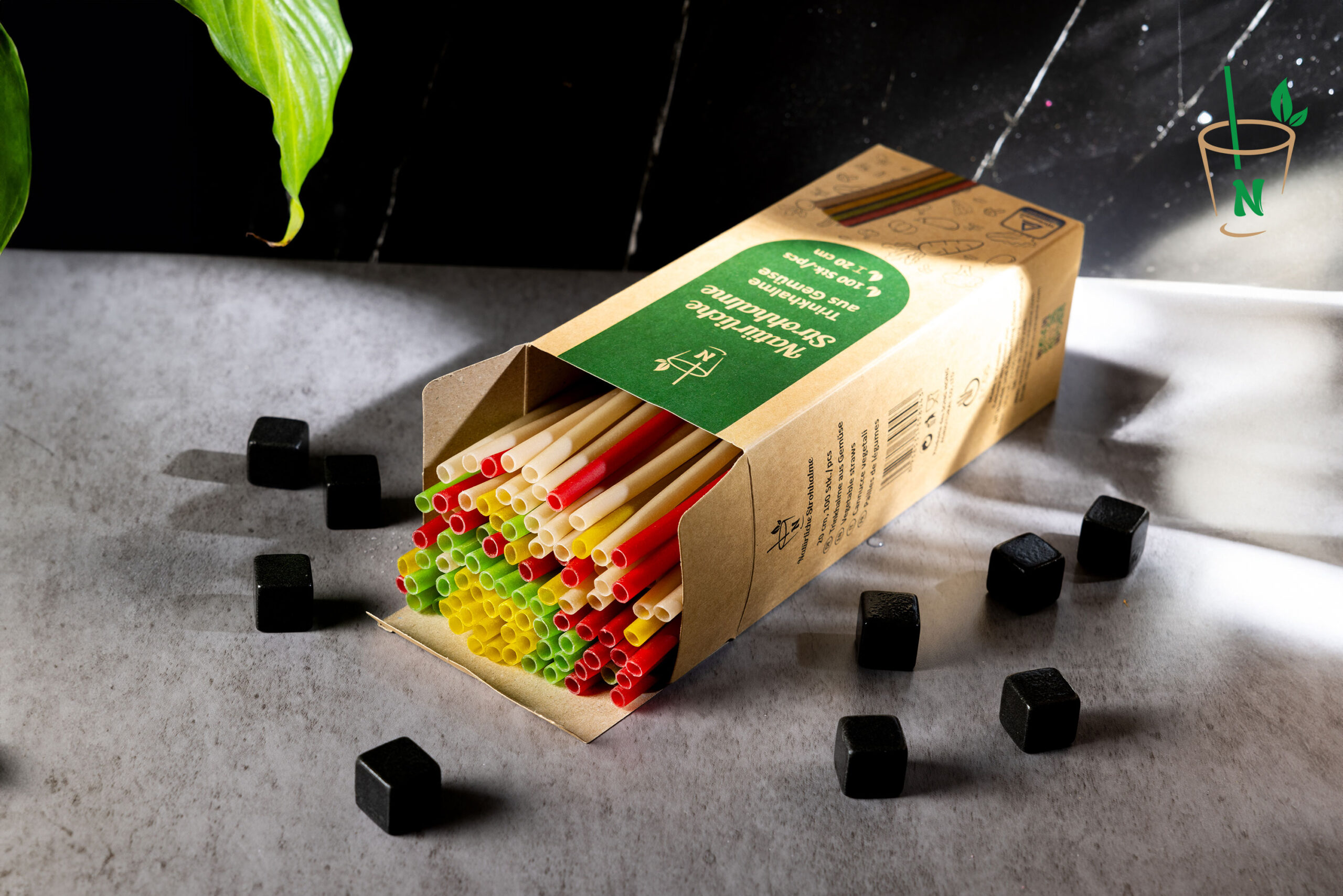
Restaurateurs are now searching for ways to avoid these costs. This is where natural straws come into play. Not every product intended for single use automatically falls under the tax obligation.Natural straws made from purely plant-based raw materials, such as tapioca or arrowroot flour, often enjoy a special status in practice:
- Home Compostable: They decompose completely within a few months in organic waste or garden compost.
- No Littering: Because they are part of a biological cycle, they do not contribute to the permanent littering of public spaces.
- No Tax Burden: Since they are often not classified as classic, taxable single-use packaging in many statutes, they offer a simple way to act sustainably without triggering the 0.20 Euro surcharge per straw.
Conclusion: Act Today, Be Prepared for Tomorrow
The municipal packaging tax is evolving from an exception to the new normality. Businesses that switch early to intelligent alternatives like natural straws secure long-term advantages:
- Financial: Avoidance of additional taxes and bureaucratic effort.
- Image: Strengthening the brand profile among customers who increasingly value true sustainability.
- Security: Reducing the pressure to adapt before the tax becomes mandatory in your own municipality.
Choose a solution that is both ecologically sensible and economically wise. With natural straws, you position your business as a leader in a plastic-free and cost-efficient future.
Do you want to make your business tax-secure and sustainable? Contact us today for an individual offer on our natural straws!
Jetzt auf Naturstrohhalme umsteigen und den eigenen CO₂-Fußabdruck beim Trinken aktiv senken!
Jetzt bestellenKontakt:
📞 +49 40 8707 6348
📧 info@natur-strohhalme.com
🌐 www.natur-strohhalme.com
Siehe auch: Danger of Metal? Why Natural Straws are the Safe Choice – Vegetable Straws
Municipal Packaging Tax: Why Natural Straws are the Strategic Solution
The municipal packaging tax is spreading in Germany. Learn how natural straws help businesses avoid...
Read moreDanger of Metal? Why Natural Straws are the Safe Choice
Metal straws can be dangerous. Learn why natural straws made from plant-based materials are the...
Read moreVegetable Drinking Straws at Intergastra 2026: A Review of Innovation
Discover how our vegetable drinking straws took center stage at Intergastra 2026 in Stuttgart. An...
Read morehidden danger of glass straws: hidden danger of glass straws – what you need to know
hidden danger of glass straws: Viral TikTok video warns of splinters, injuries and hygiene risks....
Read morehome compostable versus industrial compostable: What really is compostable and how to dispose of it correctly
home compostable versus industrial compostable: Learn the real difference, which materials belong where, and why...
Read more4-bin system in Hamburg: 4-bin system in Hamburg for better waste separation and recycling
4-bin system in Hamburg: Learn how organic, paper, recycling and residual waste bins improve waste...
Read moreINTERGASTRA 2026: INTERGASTRA 2026 in Stuttgart – Natur-Strohhalme presents sustainable vegetable straws for gastronomy
INTERGASTRA 2026 in Stuttgart: Discover Natur-Strohhalme with sustainable vegetable drinking straws for gastronomy, hospitality and...
Read moreGreen Skills: How Green Skills Are Shaping the Sustainable Future of Work
Entdecken Sie, warum green skills wichtig für die Zukunft der Arbeit sind. Erfahren Sie, was...
Read more