

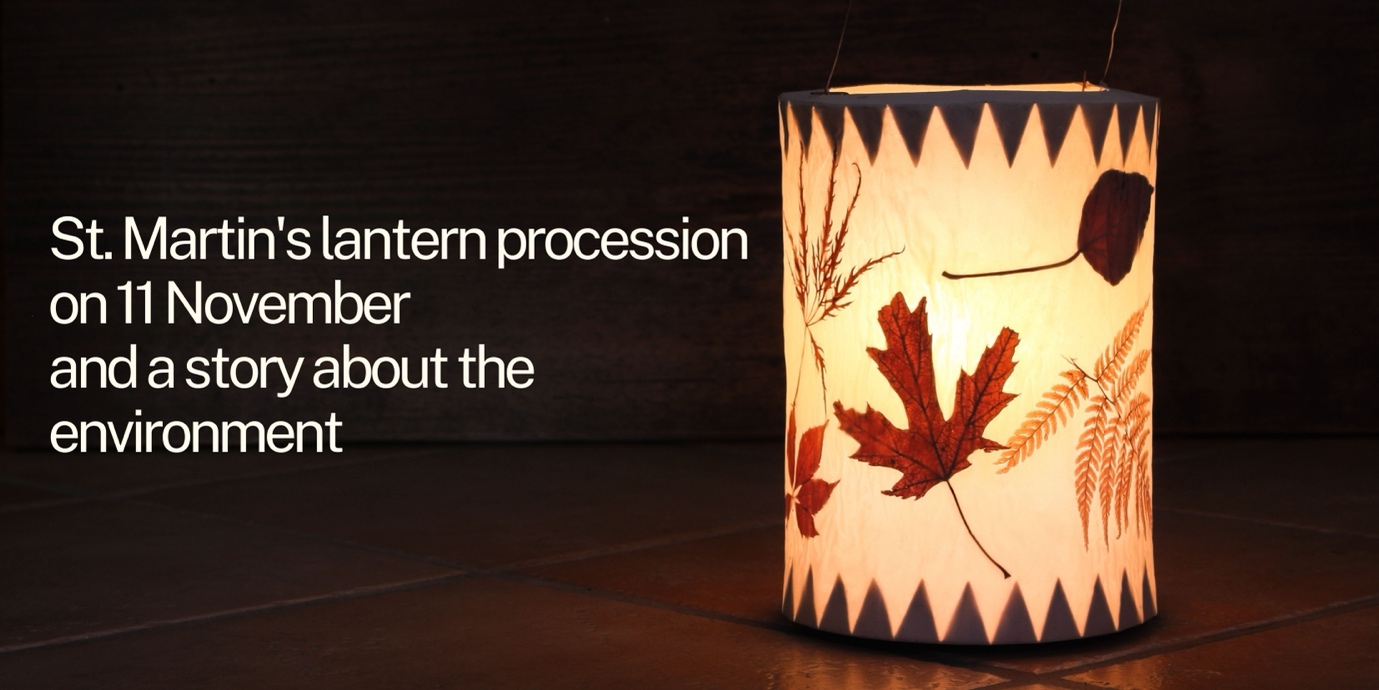
In early November, darkness falls early. And then, on an evening around 11 November, they are out again: children carrying paper lanterns, some lovingly handmade, some already a little lopsided after the first gust of wind. At the front rides a man in a red cloak, and behind him parents sing along to the old lantern songs, realising by the second verse that they only half remember the words. At the end there is a St. Martin’s bonfire, warm children’s punch and a sweet bread man with raisin eyes. A small tradition that brings a surprising amount of light into grey autumn every year.
Behind all those lanterns lies a story that is more than 1,600 years old and still fits our time remarkably well.
Half a cloak, a whole story
Martin was a young soldier in the Roman army. On an ice-cold winter evening outside the gates of Amiens, he met a beggar who had barely anything to wear. Martin had no money with him. What he had was his sword and his military cloak. So he took the sword, cut the cloak in two and placed one half around the freezing man’s shoulders.
Martin later became Bishop of Tours, and 11 November, the day of his burial, is still his feast day.
What makes this legend so beautiful is its sense of measure. Martin kept one half for himself. He shared in a way that was enough for both. No grand heroic act, rather a calm, wise gesture: I take what I need and leave enough for the other.
Sharing today also means sharing resources
If we carry this image into our own time, the cloak is the earth we share with everyone who comes after us. The children holding lanterns belong to that group, and so do their children, who have not even been born yet.
The honest question is: are we only taking our half right now? Often not. Many single-use products are used for a few minutes, while their remains stay in the environment for a very long time. That is exactly why the EU has banned numerous single-use plastic items since July 2021, including the classic plastic straw.
What we share with the next generation is quite concrete:
- clean soil, rivers and seas
- raw materials that are not available without limit
- a landscape where people still enjoy an autumn walk
- the good feeling that enjoyment and responsibility go together
What hospitality can learn from St. Martin
Hardly any industry is as closely tied to sharing as hospitality. People share a table, a bottle of wine, a crispy St. Martin’s goose with red cabbage and dumplings. Being a host essentially means passing something of yourself on.
At the same time, kitchens and bars produce mountains of packaging, leftovers and disposable items every day. The good news: small decisions often make a big difference. A few ideas for your business:
- Review your disposables: Which products end up in the bin after a few minutes, and is there a plant-based alternative?
- Take food waste seriously: Smaller portions on request, take-away boxes or partnerships with food-rescue initiatives.
- Buy regionally: Shorter supply routes save resources and tell a story guests appreciate.
- Bring guests along: One sentence on the menu explaining why you do things differently often works better than any label.
A small straw with a big idea
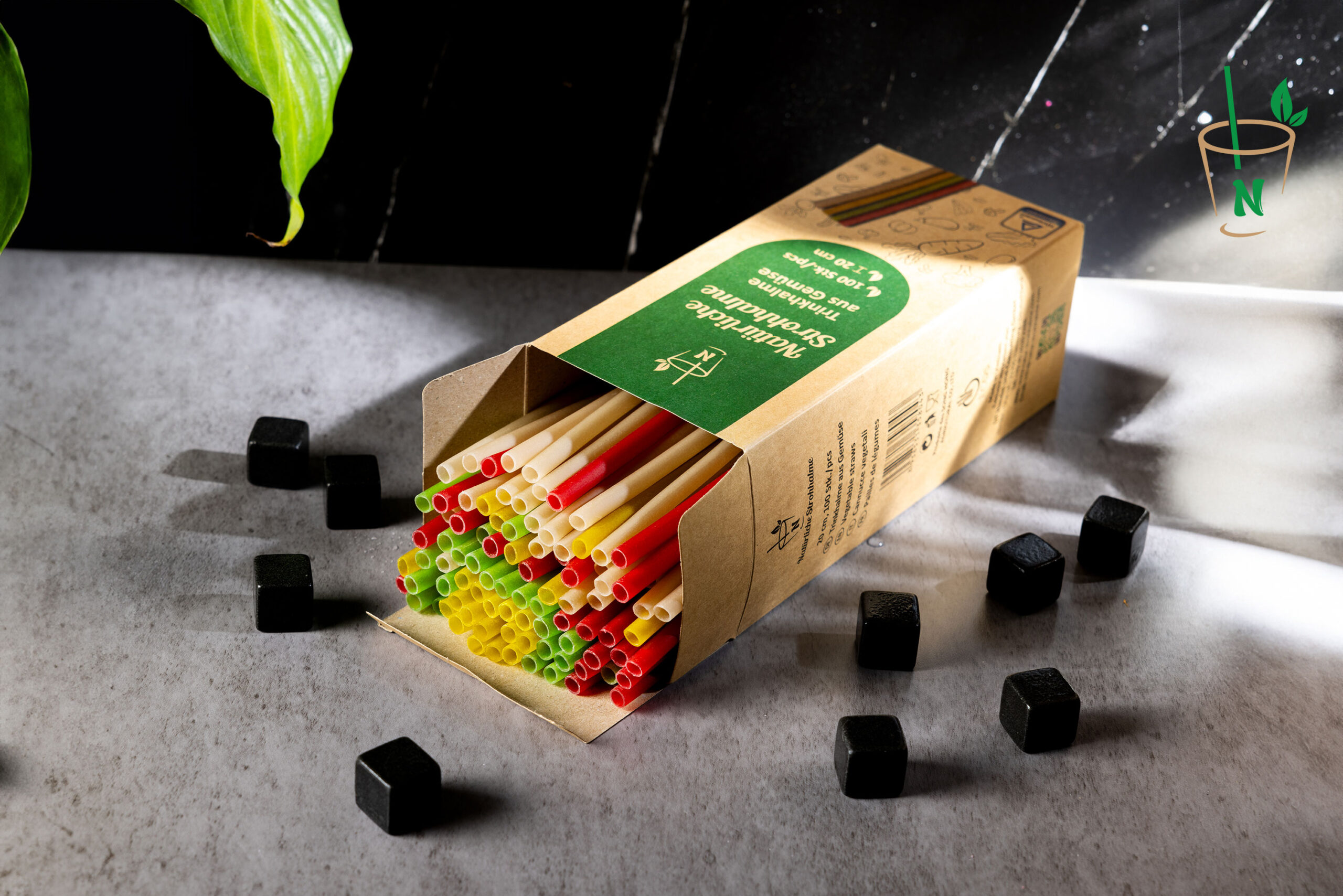
At the bar there is one such decision that is easy to overlook: the drinking straw. NaturStrohhalme are made from two plant-based ingredients, 57 % tapioca starch and 42 % arrowroot flour, plus 1 % natural colour. The white straw contains 57 % tapioca starch and 43 % arrowroot flour. You can read more about the two roots in our article on tapioca and arrowroot.
For your day-to-day operations, this means:
- Vegan (V-Label) and gluten-free, also for guests who avoid gluten
- Taste-neutral, so the drink tastes exactly as your bar team intended
- Stays firm for up to 2 hours in cold drinks
- Tested according to EU requirements for food contact materials
- No coating, therefore no typical PFAS source
And because the eye drinks too, the straws come in four colours made from real ingredients: white (natural), yellow (turmeric), red (beetroot) and green (pandan). A yellow straw glows in the glass almost like a little lantern, a red one recalls Martin’s cloak.
By the way, our most-ordered format in hospitality is Ø 8 × 200 mm, ideal for sours and fruit-forward drinks.
Your own St. Martin’s evening
Why not use 11 November as an occasion to make sharing visible in your venue? A few ideas:
- an alcohol-free “lantern spritz” with apple, elderflower and cinnamon, served with a yellow straw
- an autumn cocktail with cranberry or pomegranate and a red straw as a small tribute to the cloak
- a “sharing menu” for two, with part of the proceeds going to a local initiative
- the St. Martin story in three sentences on the daily menu
Gestures like these cost little and often stay with guests longer than the most elaborate decoration.
Martin shared his cloak only once; we get the chance to do it again every single day.
Ready to switch your business to straws made from real vegetables? Uncoated and tested against EU food contact requirements.
St. Martin and the art of sharing: an old idea for a new kind of hospitality
In early November, darkness falls early. And then, on an evening around 11 November, they...
Read morePaper straws: less green than you think. What a study from South Korea shows
When the plastic straw disappeared from Europe’s bars in July 2021, the paper straw was...
Read moreMicroplastics in the glass: what research says about beverages
A guest orders a still water, you serve it in a clean glass, nothing looks...
Read moreGuests with allergies at the bar: what they ask before they order
A guest sits down at your bar, glances at the cocktail menu and asks before...
Read moreCreative Halloween Decor with NaturStrohhalme: Have You Thought of This Yet?
For many bars and restaurants, Halloween is the one time of year when decor matters...
Read moreFederweißer, pumpkin, apple: the autumn menu 2026
Evenings are getting cooler, guests are trading Aperol for something warmer, and suddenly your bar...
Read moreA short history of the drinking straw, up to the natural straw
Some words give away their own origin, and the German word for drinking straw, „Strohhalm”,...
Read more57 % tapioca, 42 % arrowroot: what’s actually inside the straw
There’s one question almost every buyer asks us before placing a first pallet order: “So...
Read more