
Is your city plastic-free? The DUH check shows a need for improvement in Germany’s major cities. Learn how natural straws help reduce waste and safely reach sustainability goals.
How Plastic-Free Is Your City? Why Natural Straws are Key to a Sustainable Community
Natural straws are a small but crucial building block on the way to a clean and plastic-free city. Plastic waste is no longer a marginal issue: it pollutes our parks, floats in rivers, and places a massive burden on municipal disposal systems. While many citizens are already rethinking their habits, the major city check by Environmental Action Germany (DUH) shows a mixed picture at the municipal level. In this article, you will learn how Germany’s 20 largest cities rank and why natural straws are the perfect solution for gastronomy, events, and public institutions to drive change.
The DUH Check: Where Do Germany’s Major Cities Stand?
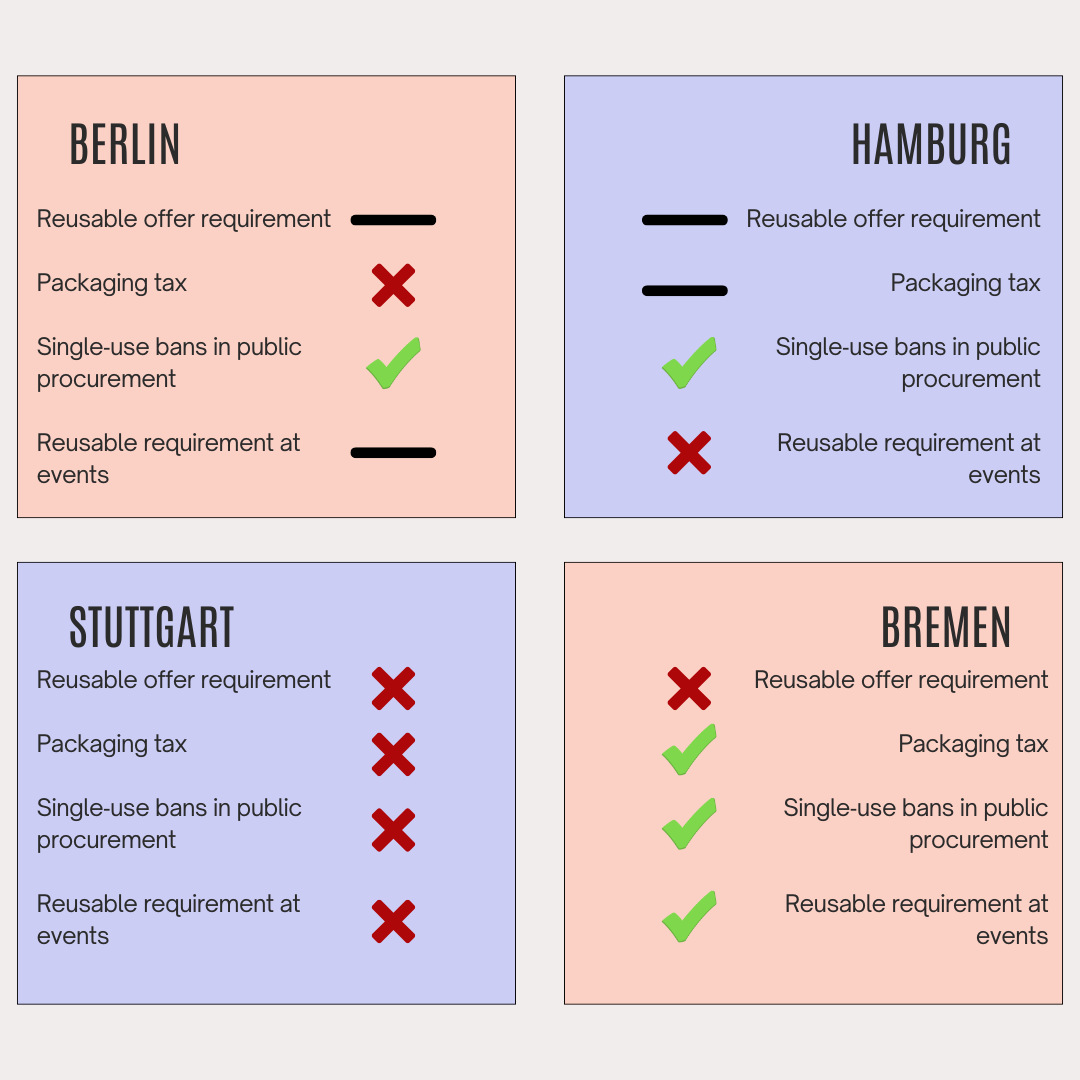 The DUH “Plastic-Free Cities” initiative evaluates municipalities based on strict criteria such as packaging taxes, reusable mandates at events, and single-use bans in public procurement. The results of the analysis are clear: none of Germany’s 20 largest cities are truly plastic-free yet.
A Look at the Leaders and Laggards
- Bremen & Bonn: These cities are already setting strong examples by introducing a packaging tax or single-use bans in public procurement.
- Berlin & Hamburg: While there are many initiatives and bans for the administration, a consistent concept for the entire city area is often still missing.
- Munich & Cologne: These cities show approaches to reusable mandates but have so far avoided binding instruments like a packaging tax.
- Stuttgart & Frankfurt: The DUH still sees a massive need for improvement here, as binding rules for plastic avoidance are largely absent.
Why Voluntary Measures Alone Are Not Enough
Many municipalities still rely on pilot projects or non-binding recommendations. However, without clear rules—such as a packaging tax or mandatory reusable requirements—progress is often too slow. In contrast, cities that move forward boldly achieve measurable success quickly: less waste in public spaces and significantly lower disposal costs.
Natural Straws: The Safe Solution for Plastic-Free Municipalities
When cities ban or tax single-use plastic, practical alternatives are needed. This is where natural straws offer a decisive advantage over other materials. They are ideal for gastronomy, events, and public institutions because they combine sustainability and safety.
The advantages of our natural straws at a glance:
- 100% Plant-based & Edible: Made from natural raw materials like tapioca, they do not burden the environment.
- Fully Compostable: They are “home compostable” and decompose completely within a short time without leaving residues.
- Focus on Safety: Unlike metal or glass, they are soft and give way under pressure, minimizing the risk of injury.
- Optimal Drinking Experience: They do not conduct temperature (no burning with hot drinks) and remain stable in the beverage.
5 Steps to a Plastic-Free City
The DUH recommends a clear package of measures for cities, where natural straws can make a significant contribution:
- Promote Reusables: Binding reusable systems for to-go sectors and city festivals reduce the mountain of waste immediately.
- Introduce Packaging Taxes: Financial incentives guide the behavior of businesses and consumers.
- Consistently Implement Single-Use Bans: Bans achieve a great impact, especially on avoidable items like disposable cups and straws.
- Sustainable Procurement: Cities must lead by example and prioritize compostable materials in their own administrations.
- Engage Citizens: Educational programs and zero-waste events bring people along on the journey to a plastic-free city.
Conclusion: Sustainability Doesn’t Have to Be Complicated
The path to a plastic-free city is clearly mapped out: promote reusables, reduce single-use, and rely on sustainable alternatives. Our natural straws exemplify how municipalities can achieve a great environmental impact with simple but effective decisions without creating new risks for citizens.
When municipalities act boldly and citizens actively participate, every city can become more plastic-free, step by step.
Do you want to make your city or business more sustainable? Order a sample of our natural straws now and become part of the plastic-free movement!
Jetzt auf Naturstrohhalme umsteigen und den eigenen CO₂-Fußabdruck beim Trinken aktiv senken!
Jetzt bestellenKontakt:
📞 +49 40 8707 6348
📧 info@natur-strohhalme.com
🌐 www.natur-strohhalme.com
Siehe auch: Municipal Packaging Tax: Why Natural Straws are the Strategic Solution – Vegetable Straws
Plastic-Free City? How Natural Straws Support the DUH Check
Is your city plastic-free? The DUH check shows a need for improvement in Germany’s major...
Read moreMunicipal Packaging Tax: Why Natural Straws are the Strategic Solution
The municipal packaging tax is spreading in Germany. Learn how natural straws help businesses avoid...
Read moreDanger of Metal? Why Natural Straws are the Safe Choice
Metal straws can be dangerous. Learn why natural straws made from plant-based materials are the...
Read moreVegetable Drinking Straws at Intergastra 2026: A Review of Innovation
Discover how our vegetable drinking straws took center stage at Intergastra 2026 in Stuttgart. An...
Read morehidden danger of glass straws: hidden danger of glass straws – what you need to know
hidden danger of glass straws: Viral TikTok video warns of splinters, injuries and hygiene risks....
Read morehome compostable versus industrial compostable: What really is compostable and how to dispose of it correctly
home compostable versus industrial compostable: Learn the real difference, which materials belong where, and why...
Read more4-bin system in Hamburg: 4-bin system in Hamburg for better waste separation and recycling
4-bin system in Hamburg: Learn how organic, paper, recycling and residual waste bins improve waste...
Read moreINTERGASTRA 2026: INTERGASTRA 2026 in Stuttgart – Natur-Strohhalme presents sustainable vegetable straws for gastronomy
INTERGASTRA 2026 in Stuttgart: Discover Natur-Strohhalme with sustainable vegetable drinking straws for gastronomy, hospitality and...
Read more