

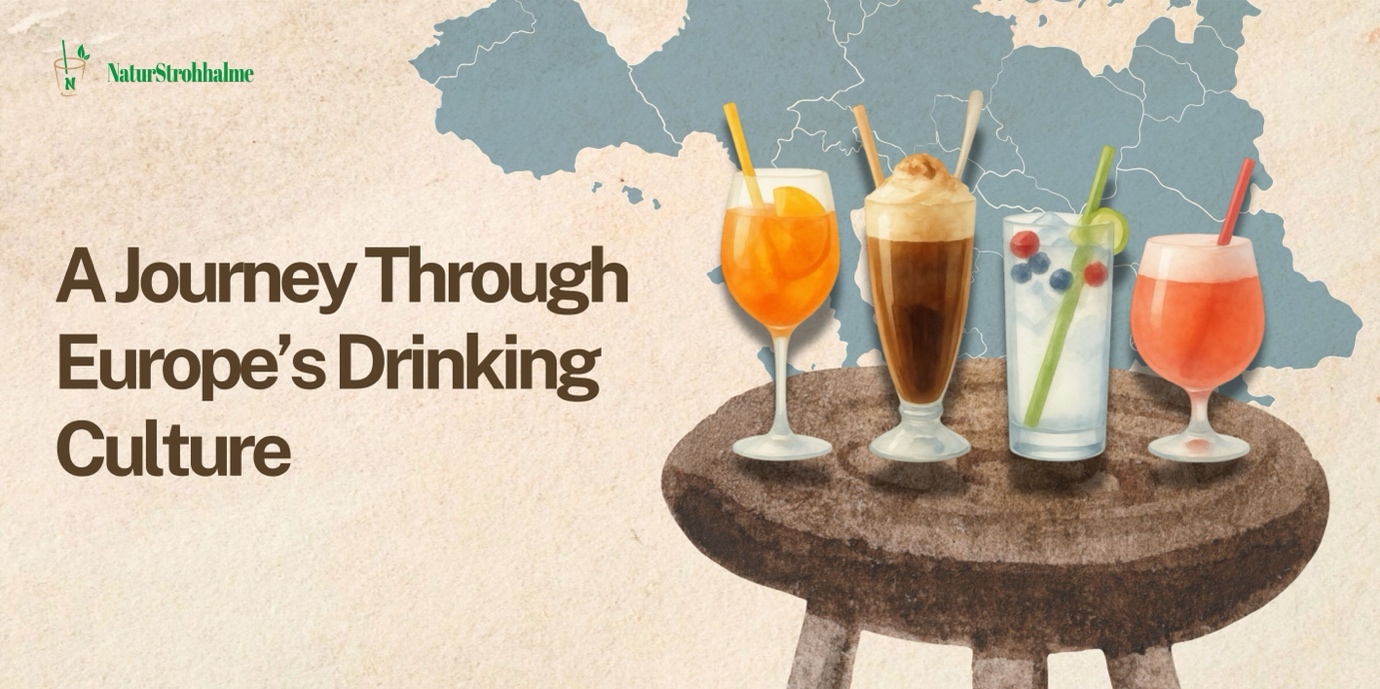
Walk past a bar in Milan at 6 pm and you’ll see glowing orange glasses and small plates of olives. At the same moment in Vienna, people are sipping a G’spritzter in a pavement garden, in Madrid the vermouth hour is just getting started, and in Berlin someone is ordering a Berliner Weisse, red or green. Europe drinks in many ways, and every region has its own rituals.
For your menu, that’s a treasure chest. Country themes, promotional weeks or a “Europe corner” on the cocktail list bring variety and conversation to the bar. Let us take you on a short trip and show you which straw colour and size suits each style along the way.
Italy: aperitivo as a way of life
The Italian aperitivo is more than a drink before dinner. It marks the shift from the working day to the evening, with friends, snacks and slightly bitter drinks that whet the appetite. Milan and Turin are considered the cradles of this tradition, while the spritz has its roots in the Veneto.
The classics on every aperitivo menu:
- Aperol Spritz with prosecco and a splash of soda
- Campari Spritz for those who like it more bitter
- Americano with Campari, red vermouth and soda
- Negroni, served on the rocks in a tumbler
Our recommendation: For spritz and Americano, the slim Ø 6 × 200 mm is a good fit and leaves the bubbles in peace. Colour-wise, Yellow (turmeric) is a warm partner for orange Aperol, while Red (beetroot) highlights the deep colour of Campari and the Negroni. For a Negroni on the rocks, many bars reach for the short Ø 8 × 150 mm, which doesn’t stick out of the tumbler.
Austria: coffee house and G’spritzter
In Austria, the coffee house is a second living room. People read the paper, stay for hours and order a Melange in between. In summer, coffee culture moves into the glass: the Viennese iced coffee with vanilla ice cream and whipped cream is a dessert you can drink. Alongside it, the G’spritzter (white wine with soda) and the Hugo with elderflower syrup, mint and sparkling wine have long become Alpine classics.
What works well here:
- Viennese iced coffee and iced coffee shakes: Ø 12 × 200 mm, so ice cream and cream get through easily
- Espresso tonic and cold brew on ice: Ø 8 × 200 mm
- Hugo and G’spritzter: Ø 6 × 200 mm
Green (pandan) is made for a Hugo with fresh mint. With iced coffee, White (natural) looks calm and elegant, very much in the style of a Viennese marble table. A small note: our straws are designed for cold drinks, so the hot Melange stays with cup and spoon.
Spain: vermouth hour and gin tonic in the copa
Spain has given the gin tonic a new home. Served in a bulbous balloon glass with plenty of ice and creative botanicals, it’s almost an art form of its own there. At weekends, “la hora del vermut” is part of the ritual too: red vermouth on ice with a slice of orange and an olive, often as early as lunchtime.
Typical drinks for a Spanish promo week:
- Gin tonic in a copa with cucumber, juniper or citrus peel
- Vermouth on the rocks with orange
- Tinto de verano, red wine with lemon soda
- Rebujito, the Andalusian festival mix of sherry and lemonade
Our recommendation: Green (pandan) at Ø 6 × 200 mm suits the gin tonic, fresh and herbal like the drink itself. Tinto de verano gets a red straw, and for vermouth in a short glass the Ø 8 × 150 mm is handier.
Germany: Berliner Weisse and spritzer culture
Germany is the land of the Schorle, from apple spritzer to wine spritzer in the dimpled Palatinate “Dubbeglas”. A true original is the Berliner Weisse mit Schuss: a sour wheat beer with raspberry or woodruff syrup, traditionally served in a bowl glass with a straw. Red or green is almost a matter of faith in Berlin. How long the straw has been part of drinking culture is told in our history of the drinking straw.
Add modern classics like the Gin Basil Smash, invented in Hamburg in 2008 and now found on menus around the world.
- Berliner Weisse raspberry: Red (beetroot), Ø 8 × 200 mm
- Berliner Weisse woodruff: Green (pandan), Ø 8 × 200 mm
- Gin Basil Smash: Green, Ø 8 × 150 mm in a tumbler
- Apple or rhubarb spritzer: White or Yellow, Ø 6 × 200 mm
With the Gin Basil Smash, the slightly wider straw pays off, because fine bits of basil float in the drink.
Your Europe menu at a glance
| Style | Size | Colour |
|---|---|---|
| Aperol / Campari Spritz | Ø 6 × 200 mm | Yellow / Red |
| Negroni on the rocks | Ø 8 × 150 mm | Red |
| Hugo, G’spritzter | Ø 6 × 200 mm | Green / White |
| Viennese iced coffee | Ø 12 × 200 mm | White |
| Gin tonic, tinto de verano | Ø 6 × 200 mm | Green / Red |
| Berliner Weisse, sours | Ø 8 × 200 mm | Red / Green |
By the way, Ø 8 × 200 mm is our most-ordered format in hospitality. If you only have room for one size, it covers a large part of this journey.
What every journey has in common
Whether Milan, Vienna, Madrid or Berlin, the requirements for a straw are the same everywhere:
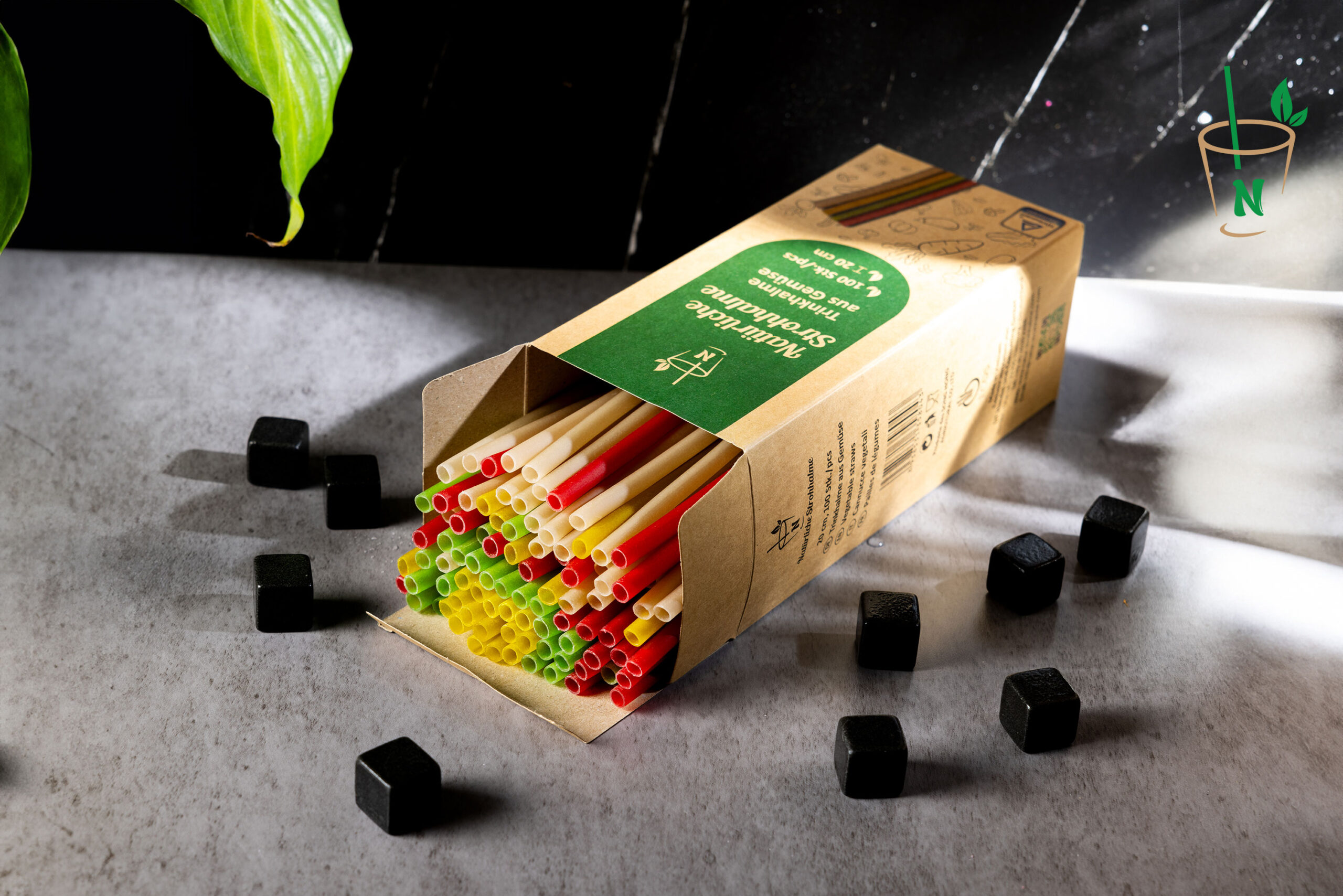
- 57 % tapioca starch and 42 % arrowroot flour, plus 1 % natural colour (the white straw: 57 % tapioca starch and 43 % arrowroot flour)
- Taste-neutral, so bitter liqueur, elderflower or vermouth can speak for themselves
- Holds its shape for up to 2 hours in cold drinks, even during a long aperitivo
- Vegan (V-Label) and gluten-free
- Tested according to EU requirements for food contact
- No coating, therefore no typical source of PFAS
A Europe promo week is a good reason to try all four colours.
Every drinking culture tells a story of people taking time for each other, and the right straw makes sure none of it gets lost along the way.
Ready to switch your business to straws made from real vegetables? Uncoated and tested against EU food contact requirements.
Aperitivo, spritz, coffee house: a little journey through Europe’s drinking culture
Walk past a bar in Milan at 6 pm and you’ll see glowing orange glasses...
Read moreFive years of the single-use plastics ban: what has really changed behind the bar
July 2021. From that month on, the colourful plastic straw that had been sitting in...
Read moreWhich straw for which winter drink? The size guide for the festive season
As soon as the first fairy lights go up outside, your menu starts to change...
Read moreSt. Martin and the art of sharing: an old idea for a new kind of hospitality
In early November, darkness falls early. And then, on an evening around 11 November, they...
Read morePaper straws: less green than you think. What a study from South Korea shows
When the plastic straw disappeared from Europe’s bars in July 2021, the paper straw was...
Read moreMicroplastics in the glass: what research says about beverages
A guest orders a still water, you serve it in a clean glass, nothing looks...
Read moreGuests with allergies at the bar: what they ask before they order
A guest sits down at your bar, glances at the cocktail menu and asks before...
Read moreCreative Halloween Decor with NaturStrohhalme: Have You Thought of This Yet?
For many bars and restaurants, Halloween is the one time of year when decor matters...
Read more