
home compostable versus industrial compostable: Learn the real difference, which materials belong where, and why true home compostability matters for sustainable products like natural drinking straws.
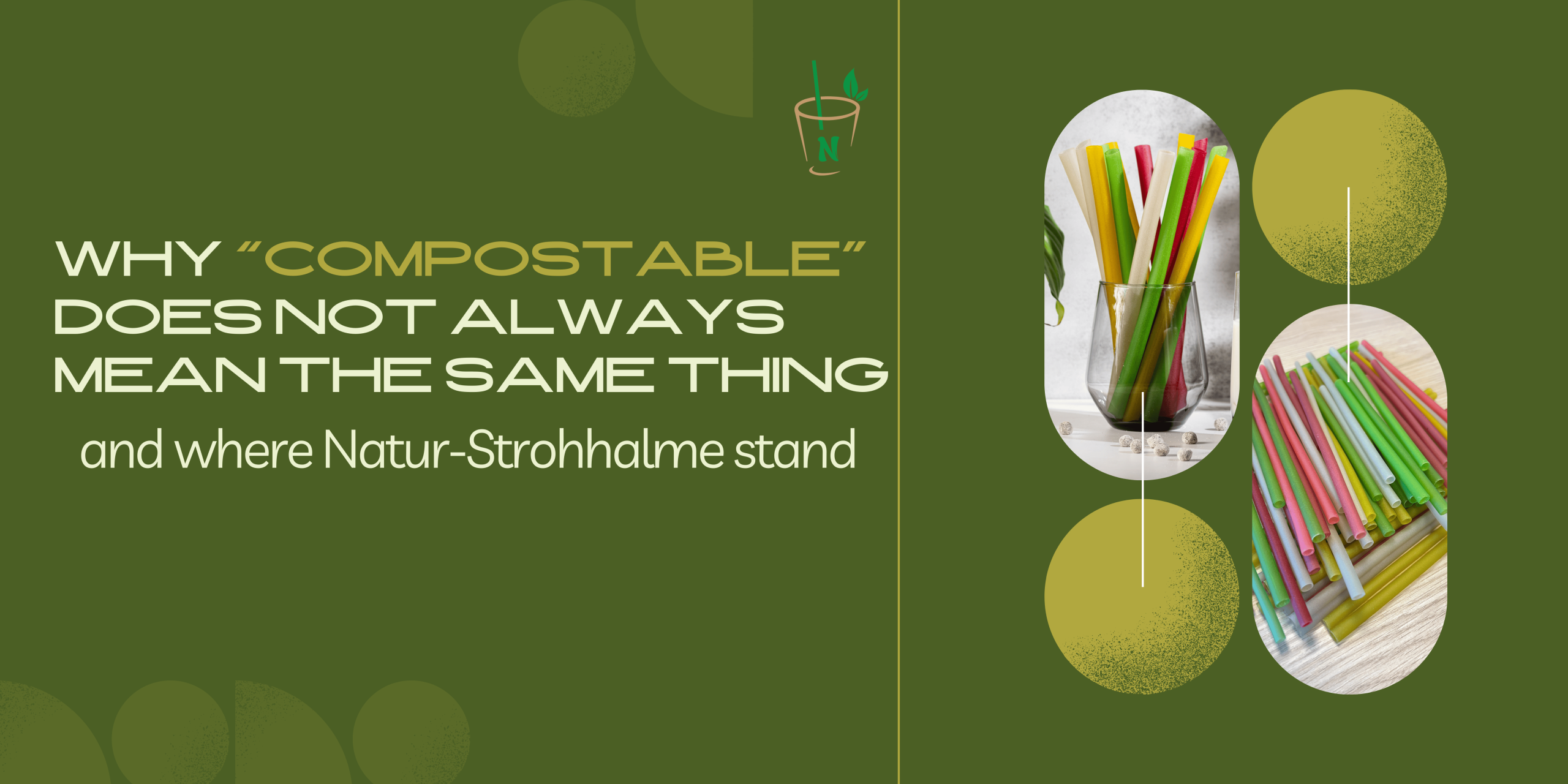
home compostable versus industrial compostable – why “compostable” is not always the same
home compostable versus industrial compostable is a distinction that often appears in small print on packaging, but it has a big impact on how sustainable a product really is. More and more people choose “compostable” items to avoid plastic waste – from packaging and cutlery to drinking straws. However, the word “compostable” alone does not tell you whether something will break down in your garden compost or only in a specialised industrial facility.
If you understand home compostable versus industrial compostable, you can decide more confidently which products are genuinely eco-friendly and how to dispose of them correctly. In this article, we explain the difference, give practical examples and show where natural straws like yours fit in.
What does “home compostable” mean?
In the comparison home compostable versus industrial compostable, “home compostable” refers to products that are designed to break down under normal household composting conditions. They are made to decompose in a garden compost heap, balcony composter or worm bin – without any special technology or high temperatures.
Typical characteristics of home compostable products:
- They break down in your garden compost, worm composter or home compost bin.
- Conditions are not controlled: temperature, moisture and airflow naturally fluctuate.
- Despite that, they should fully decompose within about 6–12 months.
- They must not leave harmful residues or microplastics in the soil.
Properly tested products often carry certifications like OK Compost HOME or DIN-certified Home Compostable, which confirm that they really break down in typical household conditions. This is a key advantage in the home compostable versus industrial compostable discussion: you are not dependent on a specialised municipal infrastructure to dispose of them sustainably.
What does “industrial compostable” mean?
On the other side of home compostable versus industrial compostable are products labelled “industrial compostable” or “commercially compostable”. These are designed to be processed in industrial composting facilities with tightly controlled conditions.
Such facilities typically:
- operate at high, constant temperatures (usually 55–70 °C),
- maintain controlled humidity and aeration,
- enable materials to break down within just a few weeks.
In the home compostable versus industrial compostable comparison, this means that items which decompose quickly in an industrial plant may persist for months or even years in a garden compost without truly breaking down. Industrially compostable products are therefore only sustainable if they actually reach an appropriate facility – which is not guaranteed in everyday waste systems.
home compostable versus industrial compostable – key differences at a glance
To make home compostable versus industrial compostable easier to understand, it helps to look at the main criteria side by side.
- Temperature:
- Home compostable: low, fluctuating temperatures typical of garden compost.
- Industrial compostable: high, stable temperatures of around 55–70 °C.
- Composting location:
- Home compostable: at home in a garden, balcony compost or small composter.
- Industrial compostable: only in industrial or municipal composting plants.
- Decomposition time:
- Home compostable: generally 6–12 months.
- Industrial compostable: often 4–8 weeks.
- Requirements:
- Home compostable: no special technology, just a functioning compost system.
- Industrial compostable: high heat, controlled airflow and moisture.
- Suitability for everyday use:
- Home compostable: easy to use wherever home composting is possible.
- Industrial compostable: only truly effective where local authorities accept and process such waste.
These differences show why home compostable versus industrial compostable is more than just a technical detail: it determines whether a product can be disposed of in an eco-friendly way by ordinary households.
home compostable versus industrial compostable: where natural drinking straws fit in
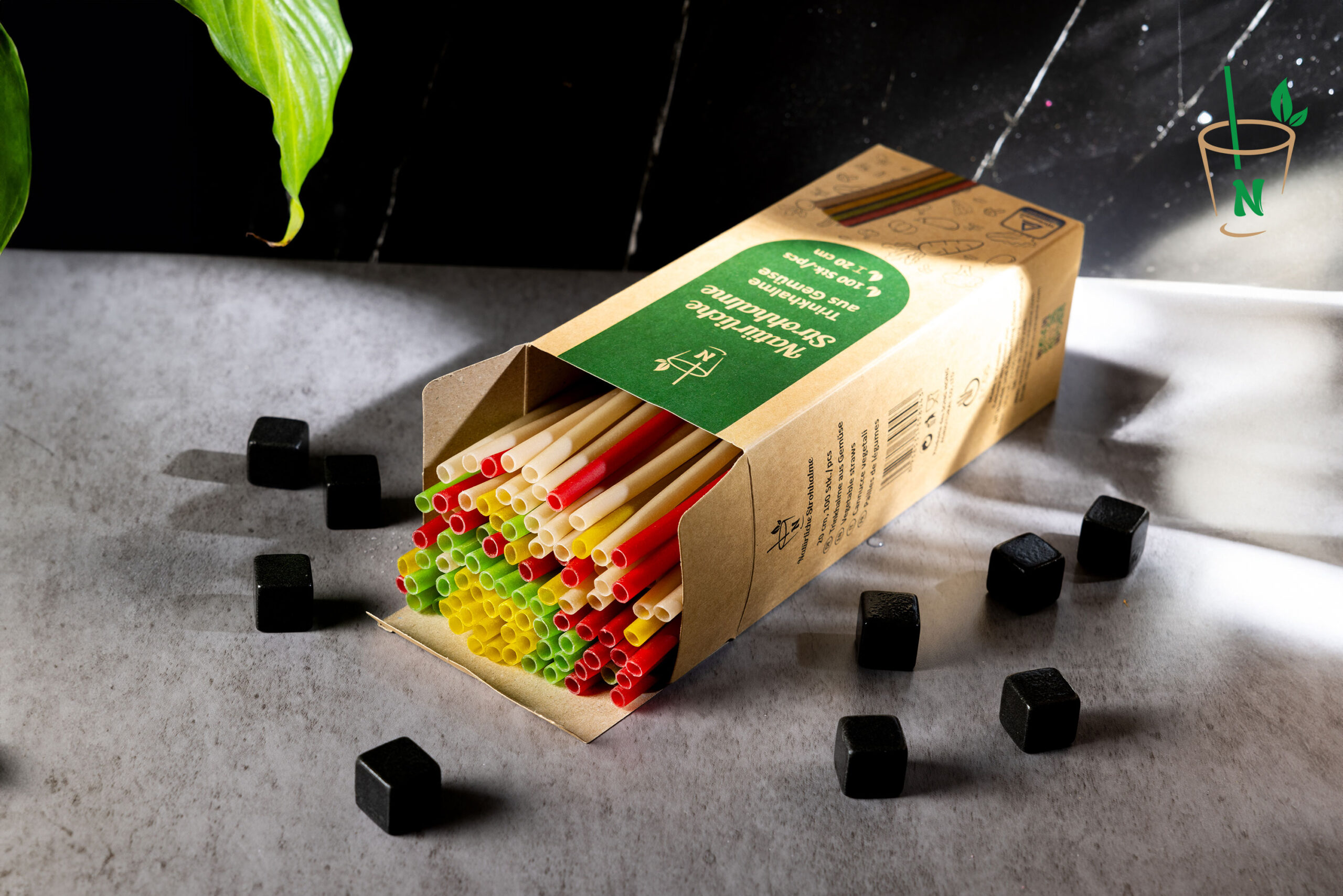
In the direct comparison home compostable versus industrial compostable, natural drinking straws like your plant-based straws clearly belong in the home compostable category. They are made from 100% plant-based, natural raw materials with no plastic or chemical coating.
In practice, this means:
- The straws decompose on your home compost without the need for an industrial plant.
- They leave no harmful residues and are fully biodegradable.
- After use, they can be disposed of in organic waste (where allowed) or in garden compost.
This directly addresses the core question behind home compostable versus industrial compostable: can people actually dispose of the product sustainably with the options they have at home? For truly home compostable products, the answer is yes.
 Which materials are truly home compostable?
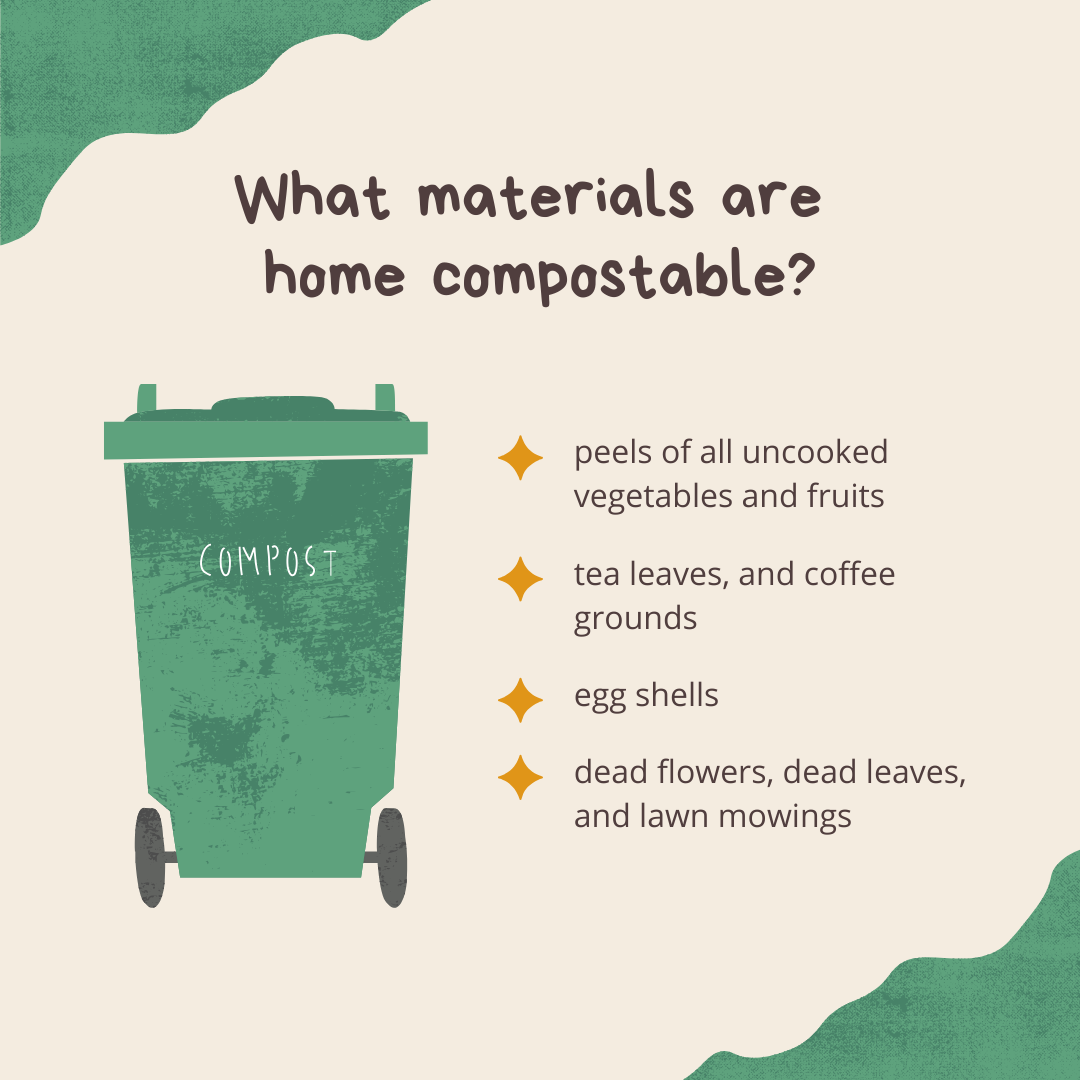
When you think about home compostable versus industrial compostable, it is important to remember that not everything that looks “natural” will actually break down in a home compost. Successful home composting relies on the right balance of “greens” (nitrogen-rich) and “browns” (carbon-rich) materials.
Typical greens for home composting:
- Fruit and vegetable scraps.
- Coffee grounds and loose tea leaves (without plastic tea bags).
- Fresh grass clippings and green plant material.
- Crushed eggshells.
- Manure from herbivores like rabbits or horses (never dog or cat waste).
- Small amounts of plant-based food leftovers such as cooked pasta or bread.
Typical browns:
- Dry leaves.
- Shredded, uncoated cardboard and paper.
- Wood shavings and sawdust from untreated wood.
- Small twigs, straw and hay.
- Corn cobs and stems, used sparingly.
- Pine needles and cones, also in small amounts.
- Plain brown paper bags, torn into pieces.
A roughly 50/50 mix of greens and browns keeps the compost moist but not wet, well ventilated and largely odour-free – and that is crucial if you want products in the home compostable versus industrial compostable space to actually break down in your garden.
Which materials need industrial composting?
On the industrial side of home compostable versus industrial compostable are materials that require the high, controlled temperatures and hygiene standards of professional composting facilities. Under these conditions, even problematic organic waste can be processed safely and quickly.
Examples of materials that typically need industrial composting:
- Meat, bones and fish scraps.
- Dairy products such as cheese and yoghurt.
- Fats, oils and larger amounts of cooked food.
- Food-soiled paper products such as pizza boxes, napkins and kitchen towels.
- Processed foods like cooked rice, pasta or baked goods.
- Certified compostable plastics (bioplastics) such as PLA that only decompose at high temperatures.
In the context of home compostable versus industrial compostable, these materials show why industrial facilities are needed: they achieve conditions that a home compost usually cannot, ensuring fast, hygienic and complete breakdown.
Why home compostable versus industrial compostable matters for real sustainability
Ultimately, home compostable versus industrial compostable is about more than labels – it is about whether a product can be disposed of in a way that matches how people actually live. If something is only industrially compostable but local waste systems do not collect or process it as such, it often ends up in residual waste and is incinerated rather than composted.
With home compostable products like natural drinking straws, you can be confident that they will break down in your own compost or via organic waste where permitted, without relying on special infrastructure. That is why it is worth checking the fine print and understanding home compostable versus industrial compostable whenever you choose “compostable” products – it makes a real difference for the environment.
Jetzt auf Naturstrohhalme umsteigen und den eigenen CO₂-Fußabdruck beim Trinken aktiv senken!
Jetzt bestellenKontakt:
📞 +49 40 8707 6348
📧 info@natur-strohhalme.com
🌐 www.natur-strohhalme.com
Siehe auch: 4-bin system in Hamburg: 4-bin system in Hamburg for better waste separation and recycling – Vegetable Straws
PFAS-Free Sipping: Why Natural Straws Contain No Forever Chemicals
What are PFAS and why are they dangerous? Learn about “forever chemicals” and why our...
Read morePlastic-Free City? How Natural Straws Support the DUH Check
Is your city plastic-free? The DUH check shows a need for improvement in Germany’s major...
Read moreMunicipal Packaging Tax: Why Natural Straws are the Strategic Solution
The municipal packaging tax is spreading in Germany. Learn how natural straws help businesses avoid...
Read moreDanger of Metal? Why Natural Straws are the Safe Choice
Metal straws can be dangerous. Learn why natural straws made from plant-based materials are the...
Read moreVegetable Drinking Straws at Intergastra 2026: A Review of Innovation
Discover how our vegetable drinking straws took center stage at Intergastra 2026 in Stuttgart. An...
Read morehidden danger of glass straws: hidden danger of glass straws – what you need to know
hidden danger of glass straws: Viral TikTok video warns of splinters, injuries and hygiene risks....
Read morehome compostable versus industrial compostable: What really is compostable and how to dispose of it correctly
home compostable versus industrial compostable: Learn the real difference, which materials belong where, and why...
Read more4-bin system in Hamburg: 4-bin system in Hamburg for better waste separation and recycling
4-bin system in Hamburg: Learn how organic, paper, recycling and residual waste bins improve waste...
Read more