
What are PFAS and why are they dangerous? Learn about “forever chemicals” and why our natural straws are the safe, uncoated alternative to paper and plastic. 
PFAS and the Invisible Danger: Why Natural Straws are the Healthy Answer
Natural straws offer a simple and effective solution to a problem that is currently causing concern in environmental policy worldwide: PFAS. This abbreviation stands for so-called “forever chemicals.” While many conventional single-use products and even coated paper straws are criticized for containing PFAS, our natural straws carry no coating at all. In this article, you will learn exactly what PFAS are, why they are so dangerous for humans and the environment, and why switching to plant-based alternatives is more important today than ever before.
What are PFAS? A Chemical Puzzle with Consequences
PFAS stands for per- and polyfluoroalkyl substances. They are a group of several thousand man-made chemicals that do not occur naturally. Since the 1940s, they have been used industrially because they possess unique properties: they are water, grease, and dirt repellent, as well as extremely heat-resistant. However, this very persistence is the problem. The chemical bond between carbon and fluorine is one of the strongest in organic chemistry. This means:
- They do not break down: In the environment, they persist for decades or even centuries.
- They accumulate: They enter the human body via water and the food chain, accumulating in the blood and organs.
The Danger in Everyday Products – Even in Straws?
PFAS are found in pan coatings, outdoor clothing, cosmetics, and often in food packaging. A particularly explosive finding: studies have shown that many paper straws are treated with PFAS to keep them stable in drinks and prevent them from getting soggy. So, anyone who thinks that choosing paper automatically means the healthiest choice might be unknowingly consuming forever chemicals.
Why Natural Straws are the Safe Alternative
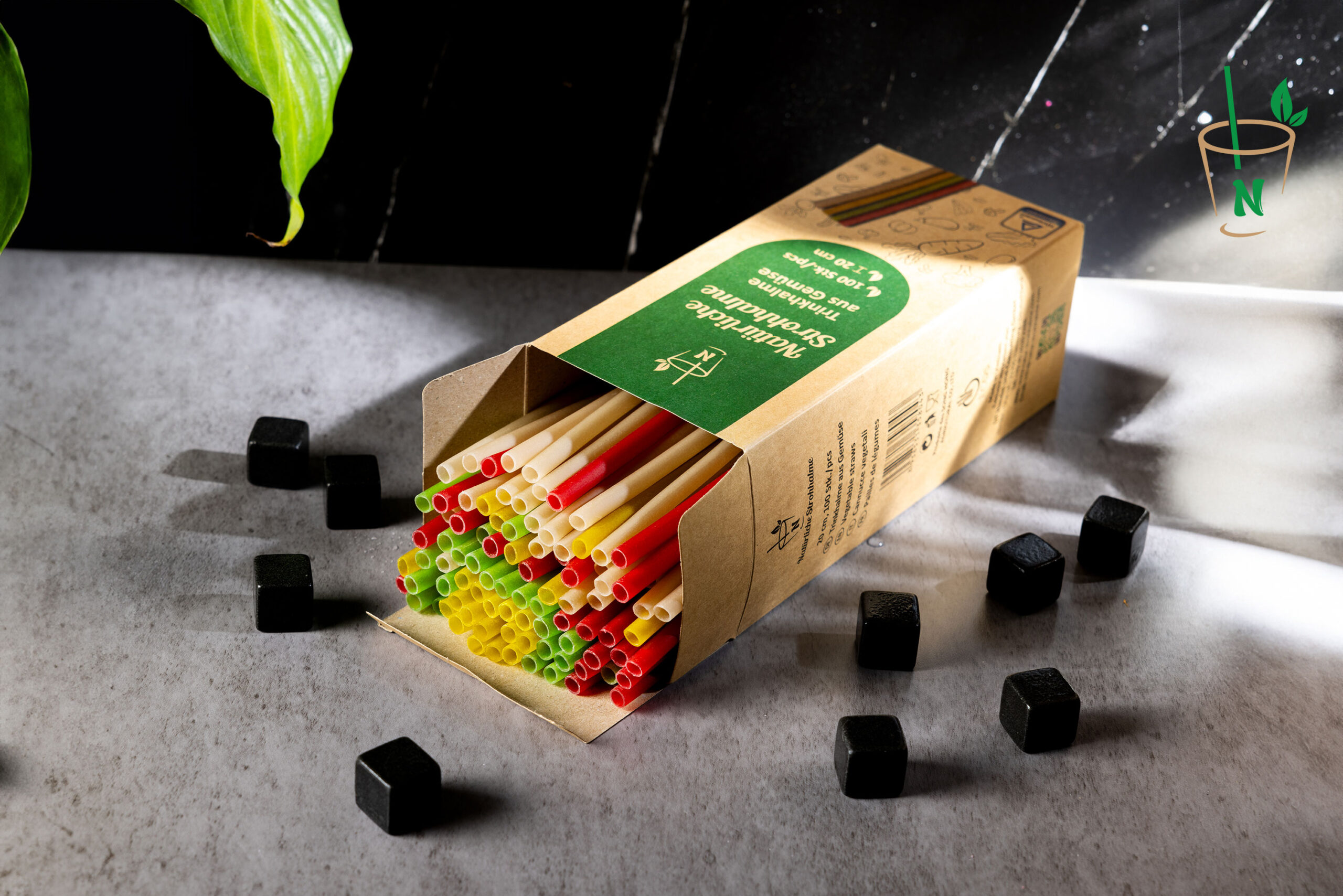
In contrast to treated paper products or plastics, our natural straws are completely free of chemical coatings. We use the natural strength of plant-based raw materials to create stability. Advantages of our Natural Straws at a Glance:
- No PFAS coating: Since our straws consist of real plant components (tapioca and arrowroot), we do not require any artificial sealants.
- No Pollutant Release: Even with prolonged contact with liquids or warm drinks, no chemicals leach out of the straw.
- No plastic, no coating: PFAS burden the environment for generations. Our straws are made from plant starch and carry no coating.
- Food-Safe and Edible: Our products are food, made from tapioca and arrowroot starch, so you can eat them after drinking.
Health Risks of PFAS: Why Caution is Better than Aftercare
 Science links PFAS to a variety of health problems. These include:
- Impairment of the immune system (e.g., reduced vaccine response).
- Hormonal disorders and effects on fertility.
- Increased cholesterol levels and liver enzymes.
- An increased risk of certain types of cancer.
Although politicians are working on bans (especially within the EU), implementation often takes years. As a consumer or restaurateur, however, you can act today by switching to uncoated, plant-based products like our natural straws.
Conclusion: Taking Responsibility for the Future
PFAS are a complex environmental problem that affects us all. Choosing uncoated products keeps one known source of coating chemicals out of the glass. With our natural straws, we show that high performance in everyday life—such as stability in a cocktail or soft drink—is possible without chemicals. Rely on the power of nature and say goodbye to forever chemicals. Serve your guests a straw made from real vegetables. Order your uncoated natural straws today, made from tapioca and arrowroot starch.
St. Martin and the art of sharing: an old idea for a new kind of hospitality
In early November, darkness falls early. And then, on an evening around 11 November, they...
Read morePaper straws: less green than you think. What a study from South Korea shows
When the plastic straw disappeared from Europe’s bars in July 2021, the paper straw was...
Read moreMicroplastics in the glass: what research says about beverages
A guest orders a still water, you serve it in a clean glass, nothing looks...
Read moreGuests with allergies at the bar: what they ask before they order
A guest sits down at your bar, glances at the cocktail menu and asks before...
Read moreCreative Halloween Decor with NaturStrohhalme: Have You Thought of This Yet?
For many bars and restaurants, Halloween is the one time of year when decor matters...
Read moreFederweißer, pumpkin, apple: the autumn menu 2026
Evenings are getting cooler, guests are trading Aperol for something warmer, and suddenly your bar...
Read moreA short history of the drinking straw, up to the natural straw
Some words give away their own origin, and the German word for drinking straw, „Strohhalm”,...
Read more57 % tapioca, 42 % arrowroot: what’s actually inside the straw
There’s one question almost every buyer asks us before placing a first pallet order: “So...
Read more