
Explore the top Gastronomy Trends of 2026! From “Plant Forward” dining to the end of the plastic era: discover why natural straws made from vegetable starch are a stylish solution for modern restaurants and bars. 
Gastronomy Trends 2026: Sustainability, Experience, and the Power of Natural Straws
Natural straws are far more than just a functional detail in 2026—they are a hallmark of the new era of hospitality. The culinary world is undergoing an exciting transformation. Despite global economic shifts, the passion for dining out is stronger than ever. In 2026, a restaurant visit is celebrated as a curated experience where quality, ethics, and creativity converge. In this article, we dive into the most influential trends of the year and explain why natural straws are the perfect match for modern restaurateurs who want to inspire guests while taking environmental responsibility.
Trend 1: “Plant Forward” – Vegetables Take Center Stage
The traditional menu structure with meat at its heart is becoming a thing of the past. In 2026, “Plant Forward” is the dominant mindset. This isn’t about restriction; it’s a culinary art form. Innovative chefs are using fermented vegetables, seaweeds, and rare mushroom varieties to create flavor profiles that rival any meat dish. This plant-centric focus naturally extends to accessories—guests who eat “green” also expect to drink “green.”
Trend 2: Genuine Hospitality Beyond the QR Code
After years of radical digitalization, there is a deep longing for human connection. While technology handles the “back of house” (like inventory), the “front of house” is returning to personal interaction. Guests in 2026 value hosts who take the time to engage. A beautifully garnished drink, served with a premium natural straw, emphasizes this attention to detail and appreciation for the guest.
Trend 3: Holistic Sustainability and the “Tax Trap”
 Sustainability is no longer an “add-on” in 2026; it is the foundation of every successful business. This includes everything from ingredients to consumables.
- Waste Avoidance: Municipal packaging taxes have made single-use plastic and low-quality alternatives expensive and bureaucratic.
- Circular Economy: Restaurateurs increasingly ask what happens to a product after use.
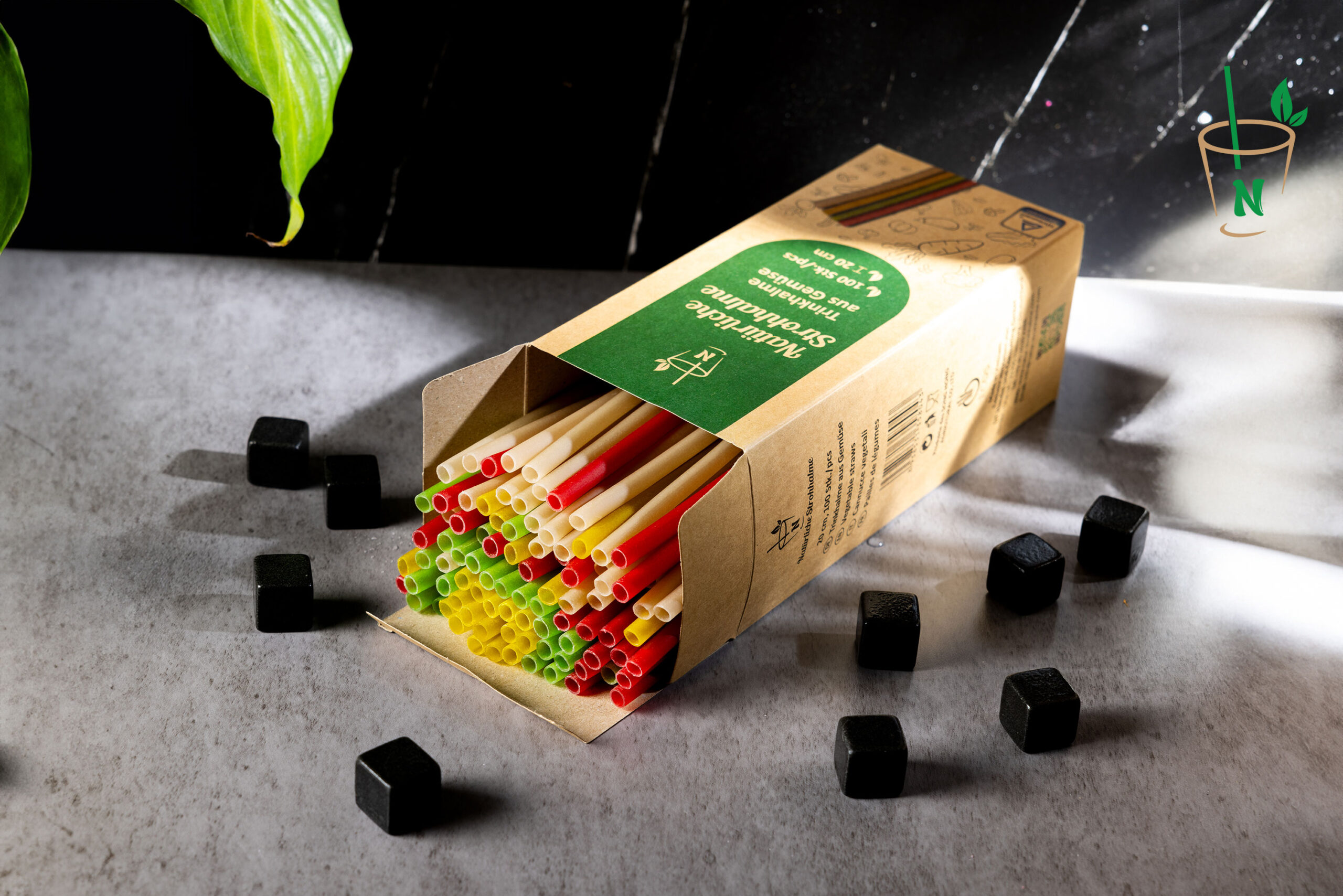
Natural straws give a simple answer. They are made from plant starch, with no plastic and no coating. They are exceptionally sturdy, do not get soggy like paper straws, and can even be eaten after use. They signal to the guest immediately: “We have thought this through to the very end.”
Why Natural Straws are Essential in 2026
Compared to glass, metal, or paper alternatives, natural straws offer a unique combination of benefits tailored to the fast-paced, high-quality demands of 2026 gastronomy:
| Benefit | Impact on Your Business |
| Neutral Taste | Does not alter the flavor of high-end cocktails or fine wines. |
| Superior Stability | Lasts for hours in both ice-cold and hot drinks without softening. |
| No chemical coating | Provides maximum safety for health-conscious guests. |
| Edible & Plant-Based | A true “conversation piece”—the straw becomes part of the snack menu! |
Trend 4: Experience Gastronomy and Storytelling
In 2026, guests are looking for stories. A restaurant is no longer just a place to eat; it is a stage. Whether it’s an interactive tasting event or a themed pop-up, everything must be “Instagrammable.” The vibrant, natural colors of our natural straws—derived from turmeric, beetroot, or pandan—fit perfectly into aesthetic drink concepts and provide the perfect opening for a story about sustainable innovation.
Conclusion: The Future is Conscious and Colorful
Gastronomy in 2026 marries flavor with responsibility. To be successful, businesses must show they understand the signs of the times. Small details like natural straws send a powerful message: we care about quality, safety, and the planet. Restaurants are becoming places where every visit is an emotional and sustainable journey. Be a pioneer and harness the power of nature for your business. Ready to switch your business to straws made from real vegetables? Order our natural straws today and put something on the table your guests will remember.
St. Martin and the art of sharing: an old idea for a new kind of hospitality
In early November, darkness falls early. And then, on an evening around 11 November, they...
Read morePaper straws: less green than you think. What a study from South Korea shows
When the plastic straw disappeared from Europe’s bars in July 2021, the paper straw was...
Read moreMicroplastics in the glass: what research says about beverages
A guest orders a still water, you serve it in a clean glass, nothing looks...
Read moreGuests with allergies at the bar: what they ask before they order
A guest sits down at your bar, glances at the cocktail menu and asks before...
Read moreCreative Halloween Decor with NaturStrohhalme: Have You Thought of This Yet?
For many bars and restaurants, Halloween is the one time of year when decor matters...
Read moreFederweißer, pumpkin, apple: the autumn menu 2026
Evenings are getting cooler, guests are trading Aperol for something warmer, and suddenly your bar...
Read moreA short history of the drinking straw, up to the natural straw
Some words give away their own origin, and the German word for drinking straw, „Strohhalm”,...
Read more57 % tapioca, 42 % arrowroot: what’s actually inside the straw
There’s one question almost every buyer asks us before placing a first pallet order: “So...
Read more