
 Every day, millions of people reach for a straw. For hospitality businesses, choosing the right one is no longer a small detail — it touches safety, cost, image and the environment all at once. So here is an honest straw comparison of the common options, with no marketing gloss.
Plastic straws — banned in the EU since July 2021
Single-use plastic straws have been banned across the EU since 3 July 2021. They are made from fossil raw materials, break down into microplastics over decades, and pollute oceans and soil for the long term. Venues still using old stock or imports risk fines and reputational damage. For any business with a sustainability claim, plastic is simply off the table.
Paper straws — practical, but with hidden risks
Paper straws look sustainable — but often aren’t. Many contain PFAS (“forever chemicals”) that don’t biodegrade and accumulate in the environment and the human body. PFAS are suspected of disrupting hormones and burdening the liver and kidneys. Then there are the practical problems: paper straws go soft quickly, fall apart and change the taste of a drink. More stable versions are often only achieved with extra chemicals. And the costs are rising. In Germany, cities are introducing packaging taxes: Tübingen has charged 20 cents per straw since 2022, and Freiburg added a municipal packaging tax from 1 January 2026 on straws over 10 cm. Konstanz, Cologne, Heidelberg, Bremen and Berlin are weighing similar steps. For hospitality, paper straws are not getting cheaper.
Glass straws — elegant, but dangerous
Glass straws look premium — but in daily hospitality use they are risky. Borosilicate glass is more heat-resistant than ordinary glass, yet not unbreakable. Tiny micro-cracks from normal use or temperature changes can release invisible splinters while drinking. A viral 2025 TikTok video showed a woman who swallowed glass splinters and ended up in hospital, sparking nationwide debate. For venues serving children or older guests, the risk is especially relevant. On top of that, glass straws are hard to clean hygienically. In standard dishwashers, water often reaches only a few centimetres into the tube. Residue, germs and mould can build up — barely acceptable in day-to-day hospitality.
Metal straws — durable, but rigid and dangerous
Stainless-steel straws seem robust and sustainable. But their rigidity is their biggest risk: in a fall or sudden movement, metal does not give way — with serious consequences. The documented cases are clear. In the UK in 2018, a woman died after falling onto a metal straw that pierced her eye socket. In New York in 2022, a four-year-old boy was seriously injured by a metal straw. Starbucks recalled millions of metal straws in 2016 after documented injuries to children. There is also a hygiene issue: sugary residue in scratches and dents is almost impossible to clean completely.
Vegetable straws — the honest alternative
Our vegetable straws — made from 57% tapioca starch, 42% arrowroot and 1% turmeric — have none of these problems:
- No coating — the usual PFAS source in other straws
- Not breakable — no risk of splinters
- Not rigid — no injury risk in a fall
- No cleaning needed — single-use, disposal as your waste provider requires
- Stable for up to 2 hours in cold drinks, with no off-taste
- Vegan-certified (V-Label), ISO 22000:2018, 5-star OCOP
- Made from tapioca and arrowroot, or edible after use
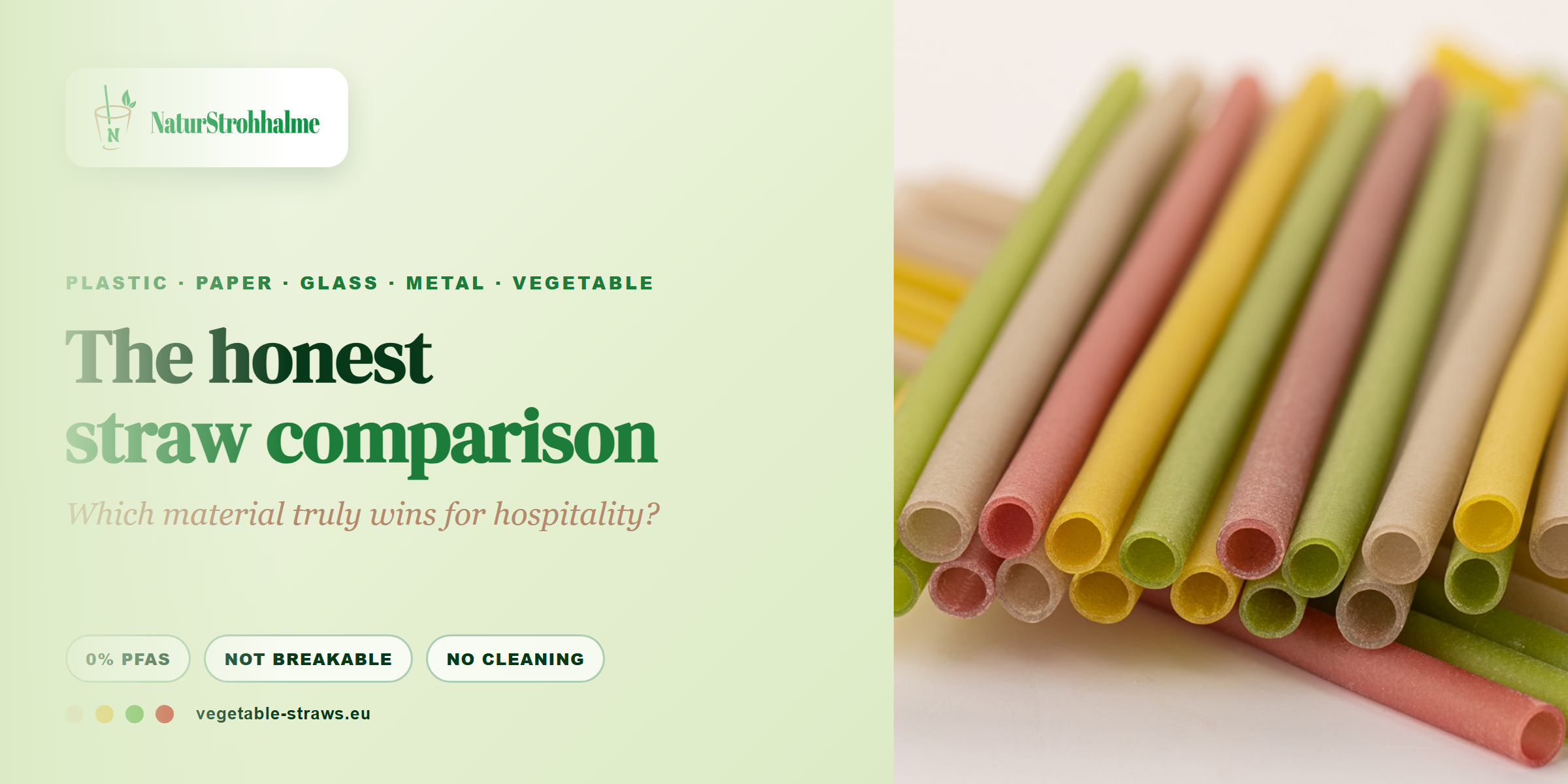
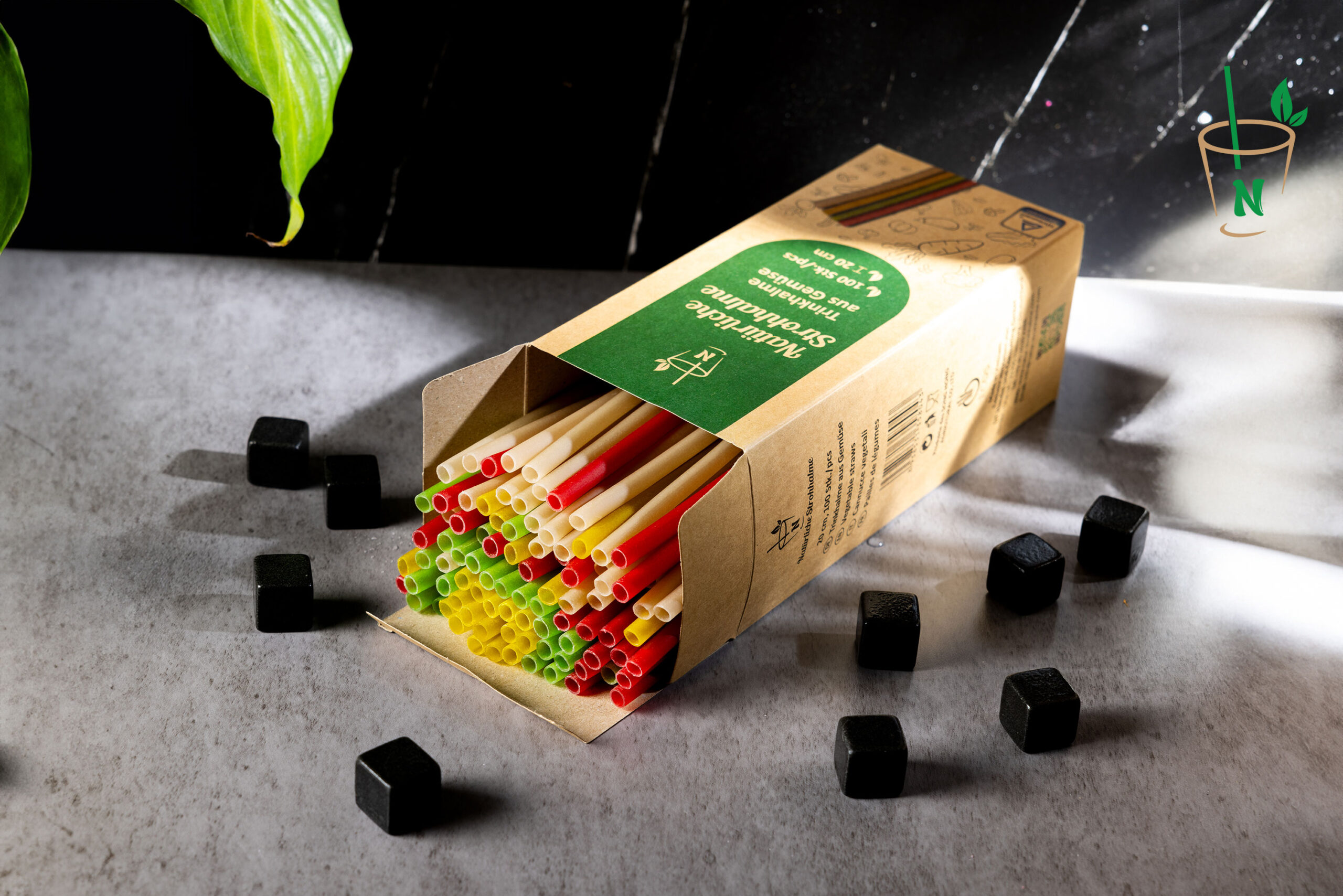
Five sizes cover every drink: Ø 6, 8, 10 and 12 × 200 mm, plus Ø 8 × 150 mm for cocktails. The colours come from natural plants: red (beetroot), yellow (turmeric), green (pandan) and beige (natural). See the full story behind them in how vegetable straws were invented.
The straw comparison at a glance
| Material | PFAS / chemicals | Safety | Cleaning | Taste | After use |
|---|---|---|---|---|---|
| Plastic | Fossil-based | Microplastics | Single-use | Neutral | Banned in EU |
| Paper | Often PFAS | Safe-ish | Single-use | Goes soggy | Slow to break down |
| Glass | None | Splinter risk | Hard to clean | Neutral | Reusable |
| Metal | None | Injury + burns | Hard to clean | Metallic | Reusable |
| Vegetable | None | No splinters, not rigid | None needed | Neutral | Edible, or as your waste provider requires |
What this straw comparison means for your venue
No material is perfect for every situation — but for everyday hospitality, the honest verdict of this straw comparison is clear. Plastic is banned, paper carries chemical and cost risks, glass and metal create safety and hygiene problems. Vegetable straws avoid all four, while keeping drinks looking and tasting their best. They are available B2B for restaurants and hotels across the EU — simply order via the button below.
FAQ
Which straw material is best for hospitality? For everyday service, vegetable straws score best on safety, taste and shape stability. They are uncoated, won’t shatter or injure, need no cleaning and stay firm for up to 2 hours, unlike plastic, paper, glass or metal. Are paper straws safe? Not always. Many paper straws contain PFAS “forever chemicals” and may also be coated with extra chemicals for stability. They also go soggy and can change a drink’s taste. Are glass and metal straws safe in a busy venue? Both carry risks. Glass can release invisible splinters from micro-cracks; rigid metal straws have caused serious documented injuries. Both are also hard to clean hygienically inside the tube.
Ready to switch your business to straws made from real vegetables? Order our natural straws today and put something on the table your guests will remember.
St. Martin and the art of sharing: an old idea for a new kind of hospitality
In early November, darkness falls early. And then, on an evening around 11 November, they...
Read morePaper straws: less green than you think. What a study from South Korea shows
When the plastic straw disappeared from Europe’s bars in July 2021, the paper straw was...
Read moreMicroplastics in the glass: what research says about beverages
A guest orders a still water, you serve it in a clean glass, nothing looks...
Read moreGuests with allergies at the bar: what they ask before they order
A guest sits down at your bar, glances at the cocktail menu and asks before...
Read moreCreative Halloween Decor with NaturStrohhalme: Have You Thought of This Yet?
For many bars and restaurants, Halloween is the one time of year when decor matters...
Read moreFederweißer, pumpkin, apple: the autumn menu 2026
Evenings are getting cooler, guests are trading Aperol for something warmer, and suddenly your bar...
Read moreA short history of the drinking straw, up to the natural straw
Some words give away their own origin, and the German word for drinking straw, „Strohhalm”,...
Read more57 % tapioca, 42 % arrowroot: what’s actually inside the straw
There’s one question almost every buyer asks us before placing a first pallet order: “So...
Read more